
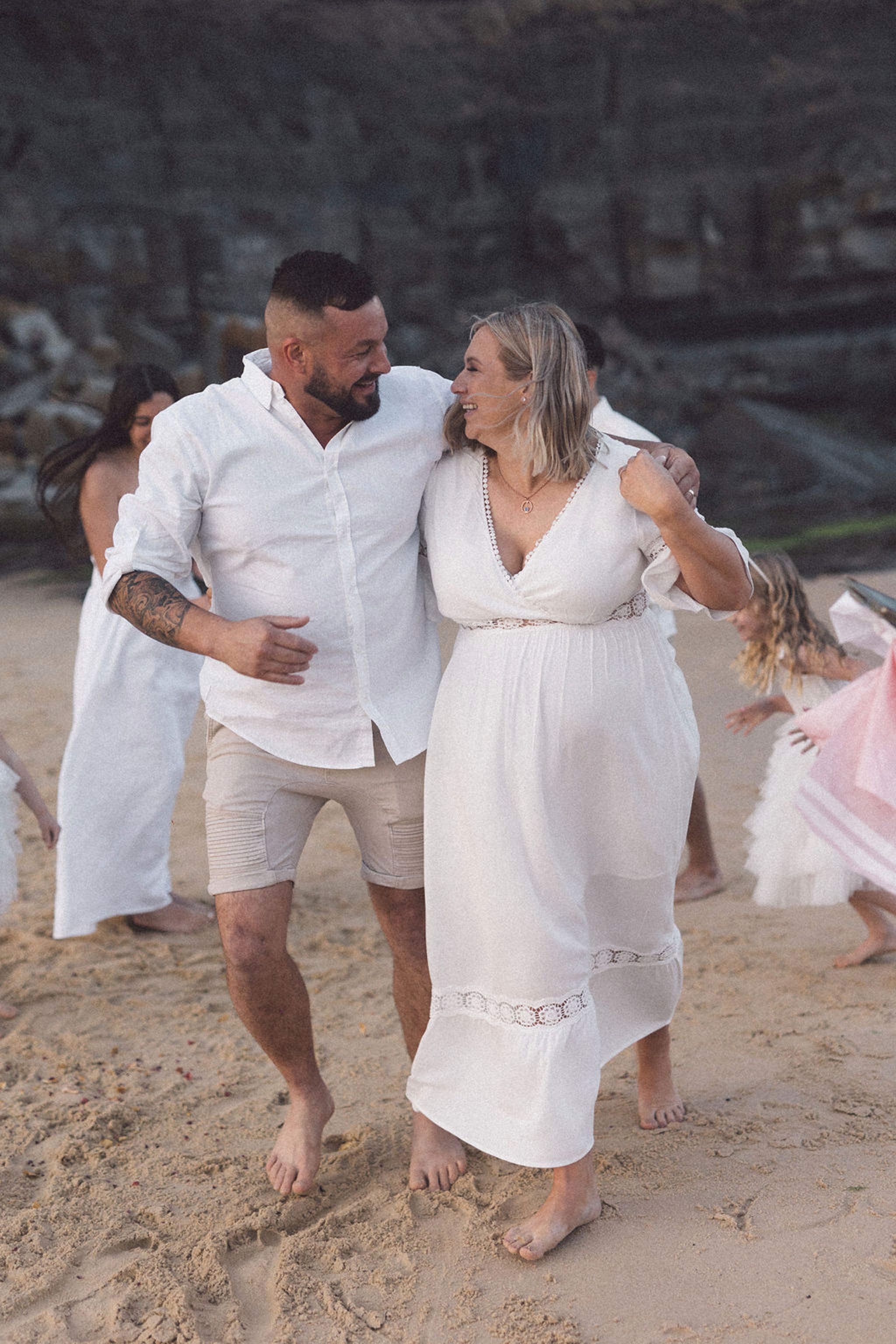
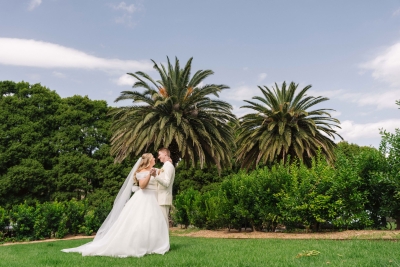
Today we’re celebrating the moments that unfold as the sun begins to set, and few are as unforgettable as a wedding ceremony at dusk. There’s something undeniably magical about exchanging vows beneath a sky painted in soft evening hues, where natural light, atmosphere and emotion come together beautifully. To explore the topic of twilight ceremonies, for After Dark, we’ve invited experienced celebrant Julie Muir to share her expert insights on making the most of this enchanting time of day. A heartfelt thank you also to Rogue Weddings for the stunning photographs featured throughout this article, perfectly capturing the romance and beauty of saying “I do” as day turns to night.
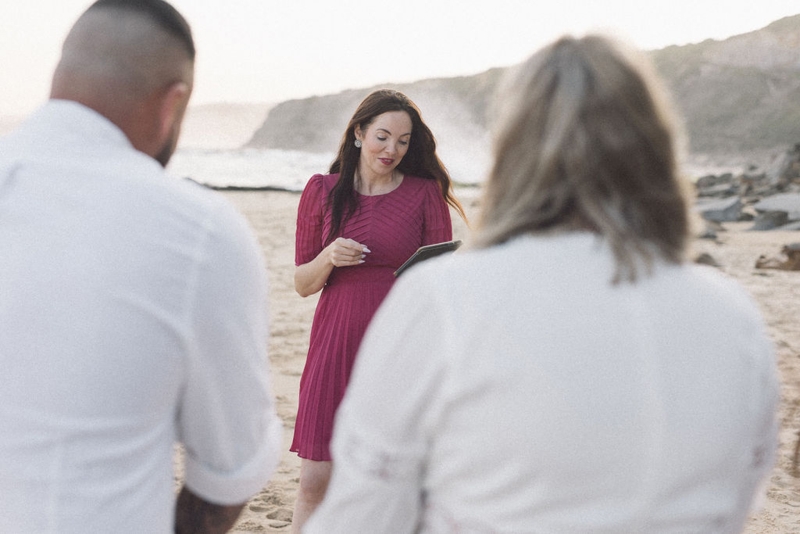
There’s a very specific kind of silence that arrives just as the sun starts to clock off for the day.
It’s not awkward silence. It’s not even quiet, really. It’s more like the world collectively deciding, okay… this matters.
Conversations fade. People who had been chatting moments earlier become more present. And somewhere between golden light and twilight, a wedding ceremony at dusk begins to feel less like an event and more like a moment everyone has somehow wandered into together.
As a celebrant, I’ve done weddings at all hours of the day, but there’s something about those moments just before sunset that always feels different. The light shifts. The energy changes. People lean in a little closer without even realising it.
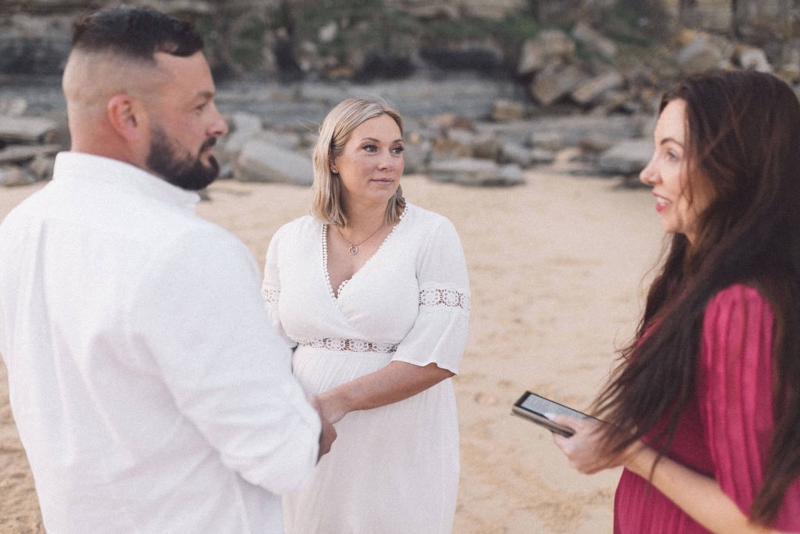
Why Dusk Wedding Ceremonies Feel So Special
The whole experience of a dusk ceremony is shaped by light. Not just what you see, but how it makes you feel. As golden hour arrives, the harshness of the day disappears. Everything softens. The light becomes warmer, the air cooler, and almost without anyone noticing, the pace begins to slow.
As the sky gradually shifts into twilight, something changes in the people too. The couple getting married stops feeling like they’re performing a moment and simply start living it. Everyone becomes more present. Guests stop thinking about what comes next. People lean in a little closer. They listen differently. They feel it more. Even larger weddings can suddenly feel surprisingly intimate.
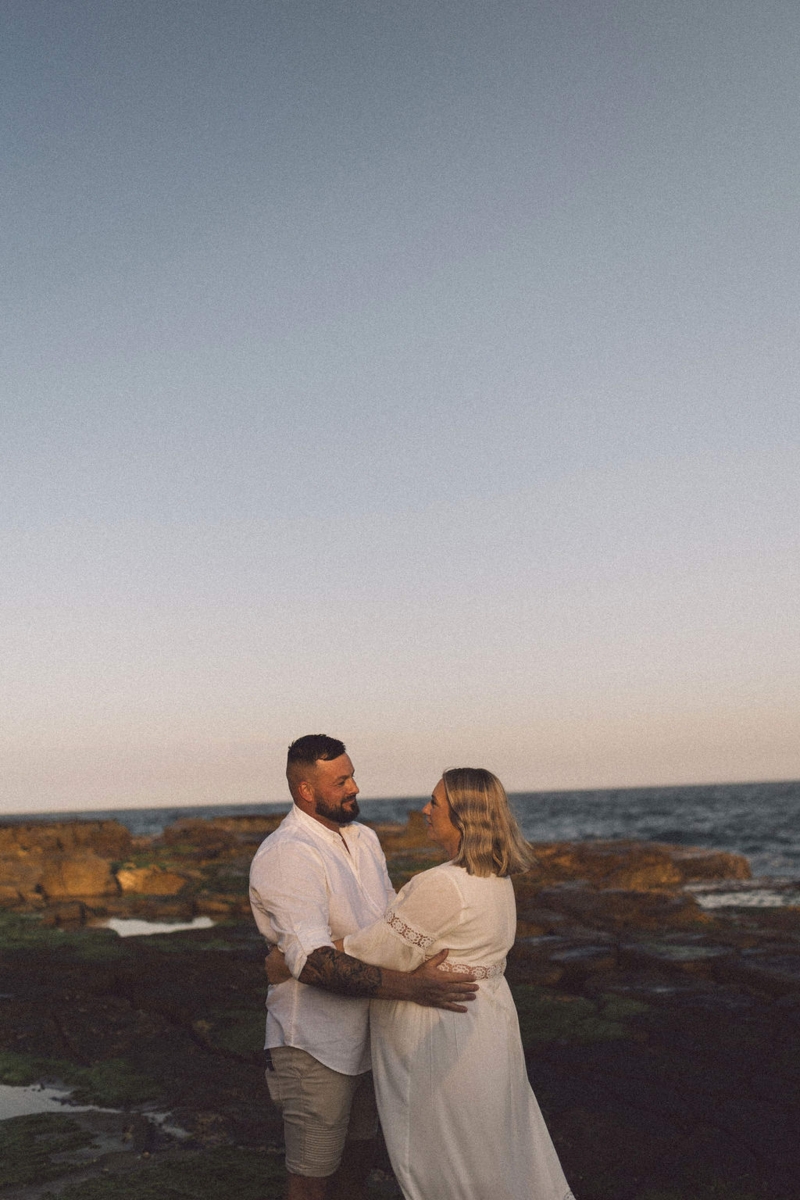
A Real Life Dusk Elopement at Bar Beach
One wedding that captures this perfectly was an elopement I did for Amber and Danny.
They travelled from Lightning Ridge to Newcastle, NSW with a simple idea: find a beautiful spot by the ocean, gather their family, and get married without overthinking any of it.
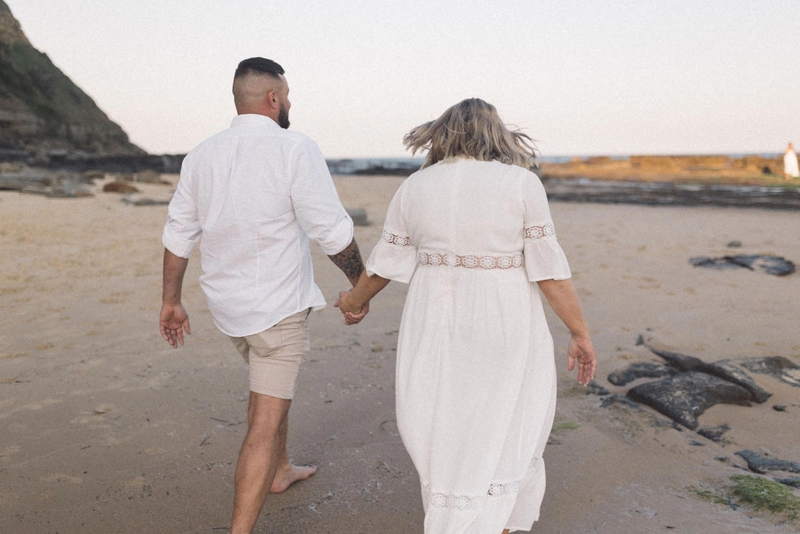
On a warm December evening, we wandered away from the crowds at Bar Beach and followed the coastline around the headland. The further we walked, the quieter it got, until we found ourselves on a hidden stretch of sand framed by cliffs and rolling waves.
It felt like we’d stumbled across our own little secret location.
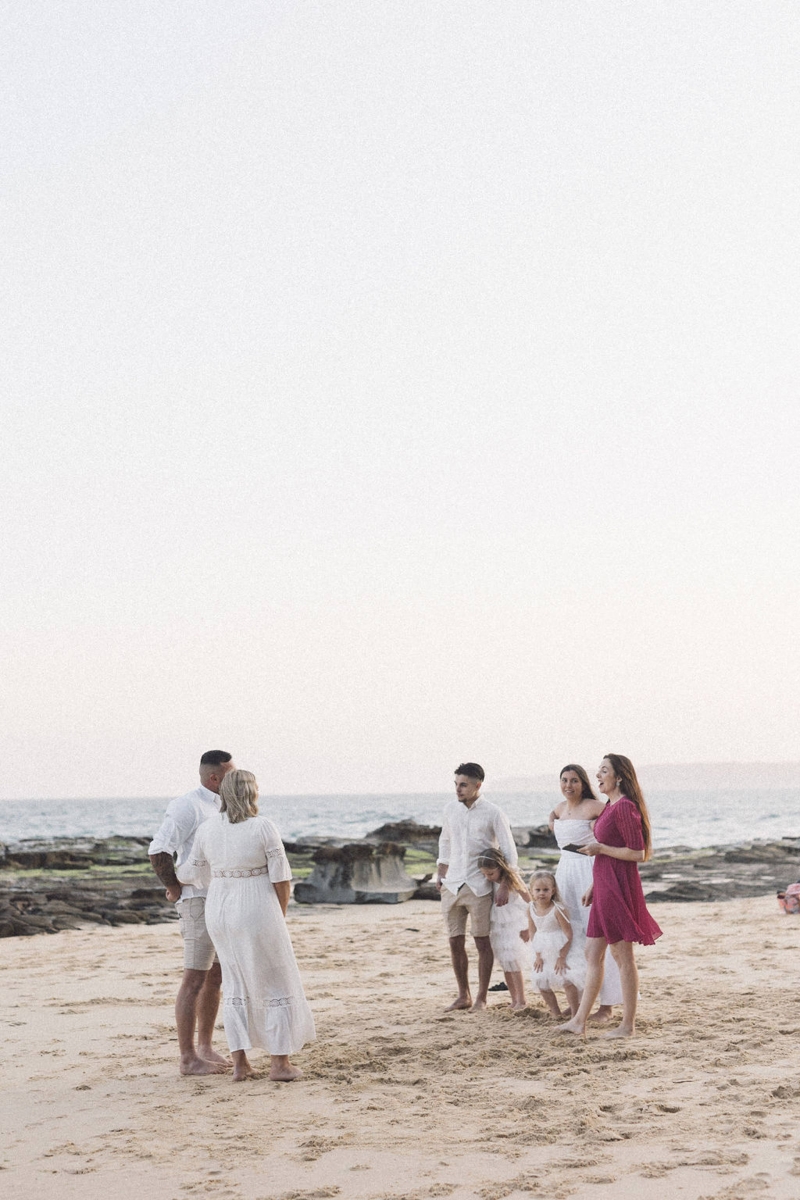
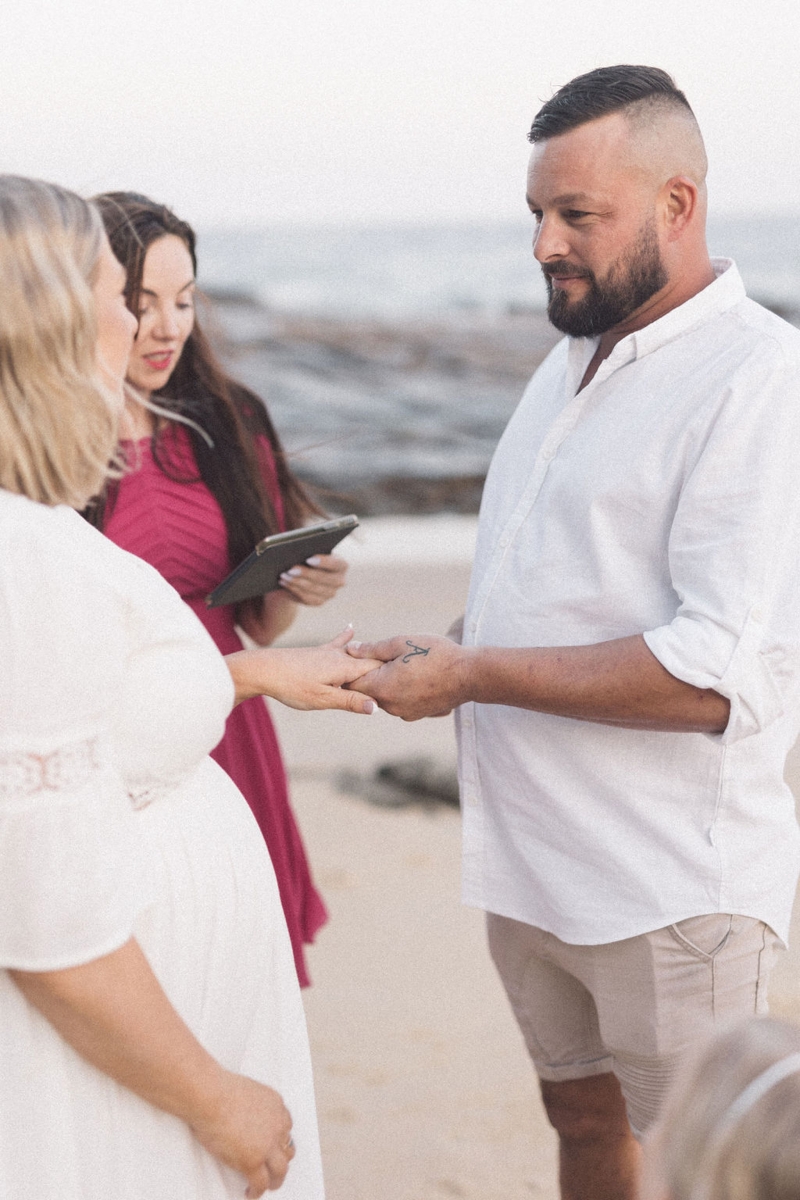
As the sun started to settle, we formed a semi-circle on the beach. No rows of chairs. No styling set-up. No strict timeline. Just family, ocean air, and a sky that kept changing by the minute. And this is where everything started to shift.
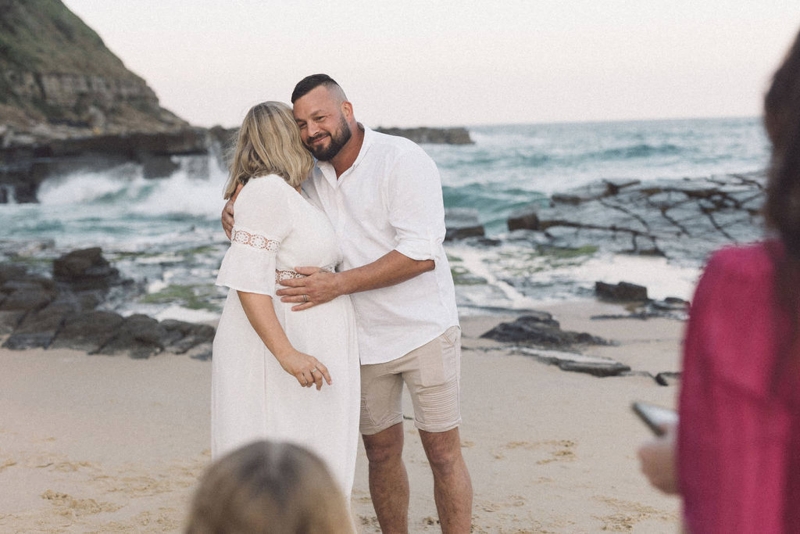
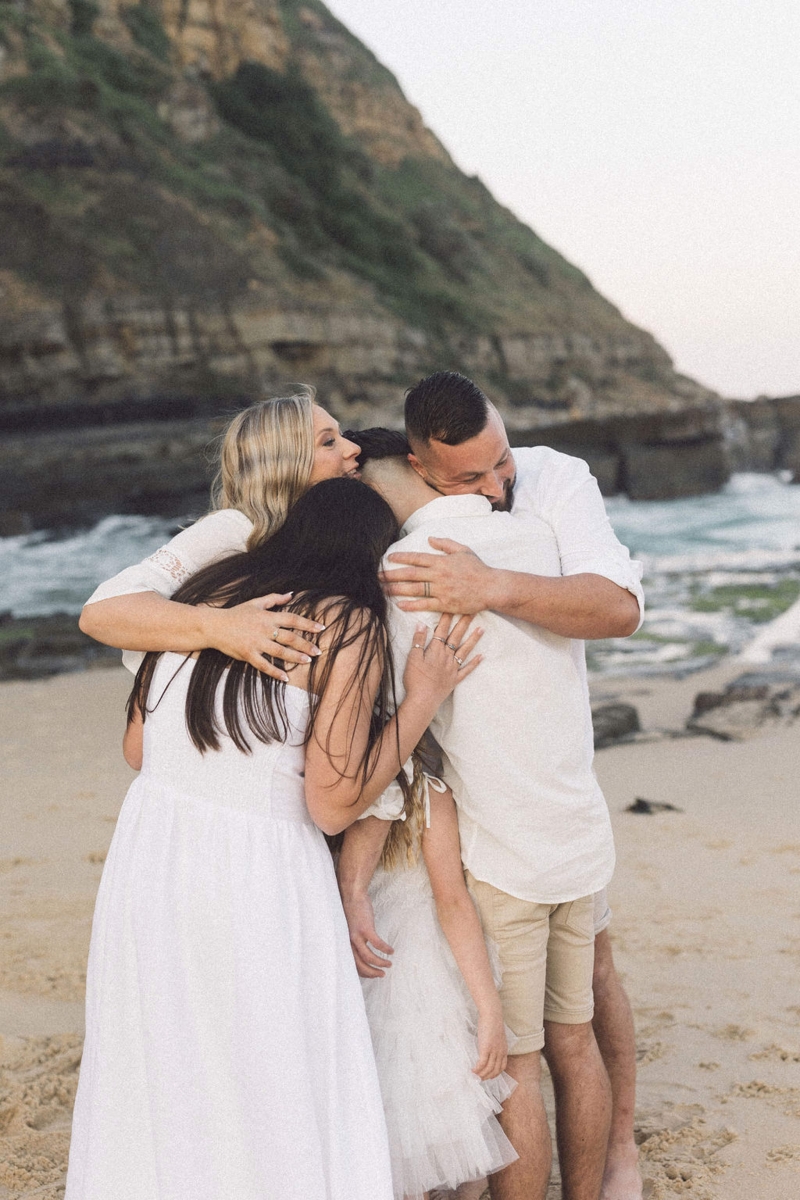
The laughter softened. There were tears, big hugs, and those really honest, unguarded moments that only happen when people feel safe enough to let go.
By the time they shared their first kiss as a married couple, the golden light had slipped into twilight. And the beach didn’t just look different…..it felt different.
Practical Tips for Planning a Dusk Wedding Ceremony
Time Your Ceremony Around Sunset
Dusk isn’t fixed: it changes with the season, the weather, and where you are. Work backwards from sunset and talk with your celebrant, photographer or planner about timing. You probably want enough daylight for the ceremony itself, but still enough room to enjoy that shift into evening.
Unlike a midday or 3pm ceremony, there’s not much wiggle room. If things start running 10 or 15 minutes late, you can’t just ‘make it up later.’ The light keeps moving whether you’re ready or not. A late arrival, a missing buttonhole, traffic, or a guest getting lost can suddenly matter a lot more than it would earlier in the day.
I always encourage couples to build in a buffer. Not to create stress but to protect the experience they’ve planned. Because the magic of a dusk ceremony is in watching the day slowly turn into night. You want to be standing in that golden light as it fades, not arriving after it’s already gone.
The sweet spot is finishing the ceremony as the sun is setting, not starting then. That way you get the beauty of the ceremony in daylight, and the atmosphere that follows naturally into night.
Golden Hour is a Team Sport
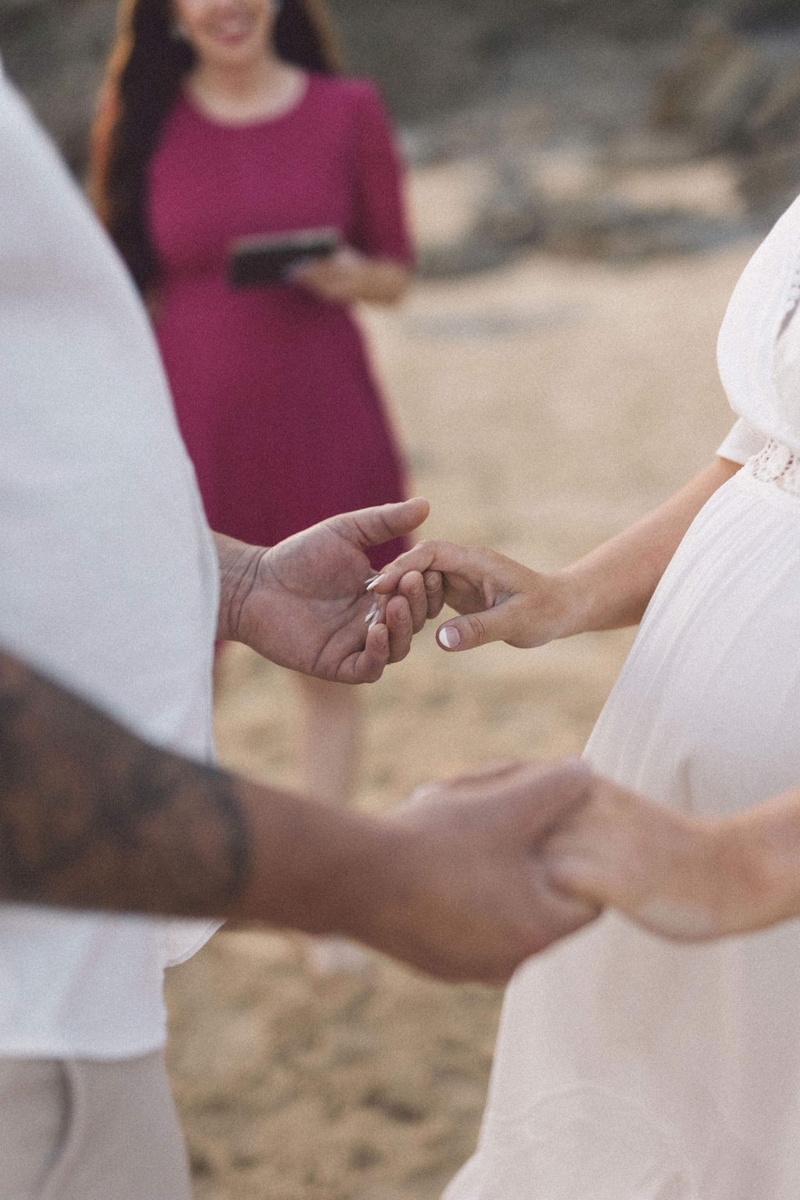
Sunset weddings require your celebrant and you photographer to work as team. Together they’ll make the most of the available light without rushing the ceremony. A photographer who understands sunset weddings won’t just take beautiful photos. They’ll help shape the rhythm of the transition from afternoon to evening, knowing when to step away for portraits, when to let the ceremony breathe, and when to quietly make the most of those fleeting moments of golden light. When your photographer and celebrant are on the same page, you can stop watching the clock and simply enjoy your wedding, knowing the timing is being looked after.
Plan for Cooler Temperatures
Even warm days can cool quickly once the sun disappears, especially by the water or in open spaces. A basket of blankets or even a simple heads-up to bring a jacket, keeps everyone relaxed and present instead of distracted by the cold. It’s one of those small things that makes a big difference to how comfortable people feel. That goes for the couple getting married too. And honestly, there’s something quite lovely about people wrapped up together as the evening settles in.
Let the Lighting Take Over
One of the best things about a sunset ceremony is that nature does most of the styling for you. The sky becomes your backdrop. The changing light sets the mood. Everything else simply falls into place.
As daylight fades, that’s when candles, festoon lights, lanterns and fairy lights really come into their own. They don’t compete with the sunset; they quietly take over where it leaves off, creating warmth, guiding guests through the space and inviting everyone to settle into the evening.
The most beautiful lighting doesn’t try to steal the show. It simply carries the atmosphere from day into night.
Consider a First Look
If your ceremony is happening late in the day, it’s worth having an honest chat with your photographer about timing. Because once the sun is gone, there’s not much light left for portraits. This is where a first look can be really helpful.
I know a lot of couples love the idea of seeing each other for the first time at the ceremony, but a first look gives you a few unexpected gifts. It creates a private moment together before everything begins and it takes some of the pressure off the timeline.
It also means you’re not spending the entire day apart waiting for an evening ceremony. You get to share some of those hours together, calm the nerves a little, and arrive feeling more grounded.
And in my experience, it doesn’t take anything away from the ceremony. If anything, it deepens it. You’ve already had a moment together so when you step into the ceremony, you’re more present, not less.
Why Sunset Ceremonies and Elopements Are Such a Perfect Match
While sunset ceremonies can work beautifully for weddings of any size, they really shine for elopements and micro weddings.
I think it’s because they share the same qualities: intimacy, flexibility, and a willingness to slow down.
The most memorable sunset ceremonies I’ve been part of haven’t been tightly scheduled. They’ve unfolded. Couples have wandered to a quiet beach, followed a track to a lookout, or simply let the light guide the timing.
Smaller weddings make that possible. There are fewer logistics, less moving parts, and more space to simply experience the moment. You can linger after the ceremony, watch the light disappear, open a bottle of champagne, and just be together.
The transition from day to night becomes part of the celebration, not just something that happens around it. And maybe that’s why it feels so right. There’s nowhere else to be. Nothing else pulling your attention away.
Just a beautiful ending to one chapter, and the beginning of the next.
Why I Keep Coming Back to Dusk Weddings
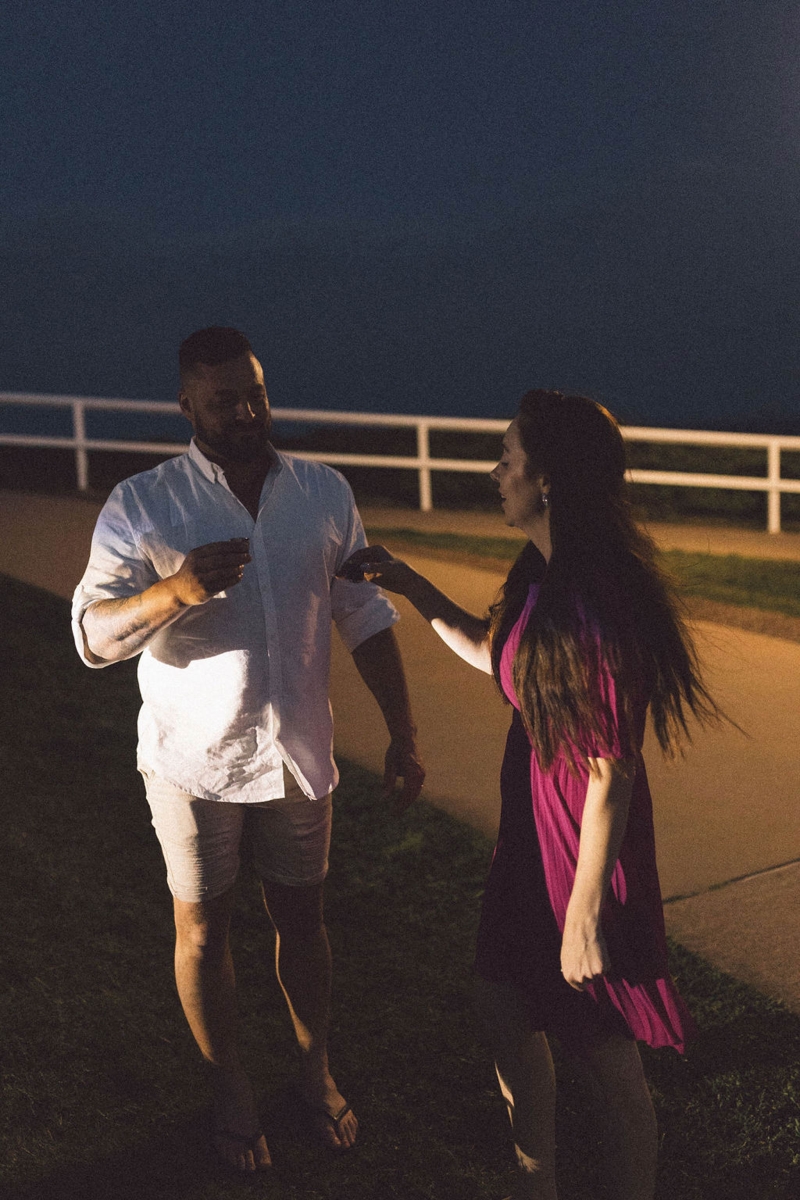
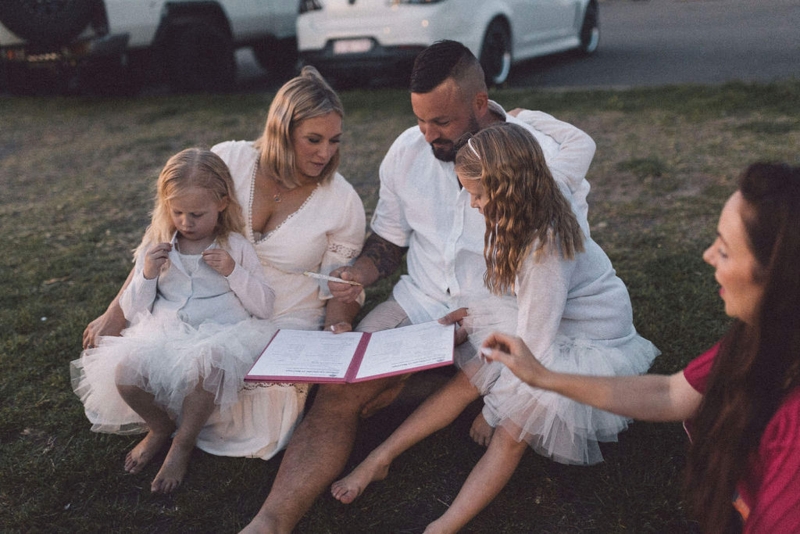
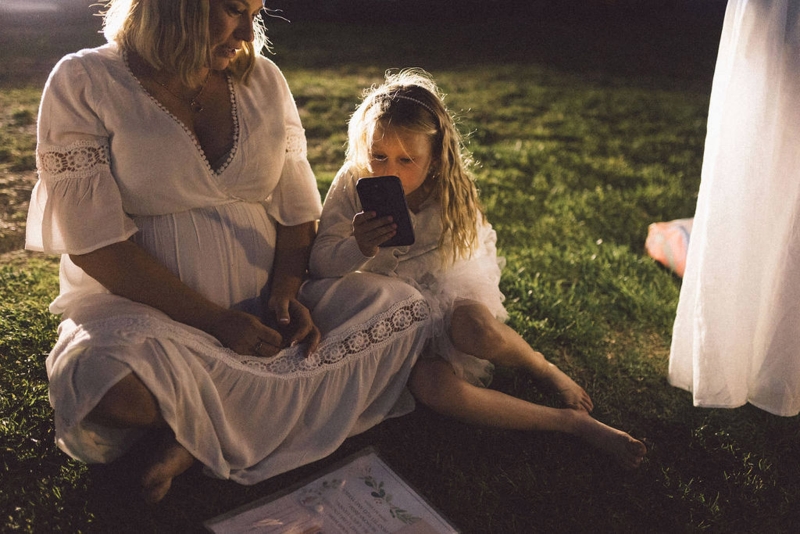
Perhaps the most memorable part of Amber and Danny’s ceremony came after the vows had been spoken. We climbed back up the cliff path, the kids barefoot and laughing ahead of us. At the top, everyone collapsed onto the grass as darkness slowly settled around us. The paperwork was signed on laps illuminated by car lights. A toast was shared.
I remember driving home that night thinking we’d all experienced something really special. It wasn’t because the ceremony had been elaborate. It wasn’t because everything had gone perfectly. It was because nobody had rushed it.
The sunset had gently slowed us all down. For a little while, nobody was checking the time or thinking about what came next. We were simply there, watching the daylight fade as another chapter quietly began.
After hundreds of weddings, that evening at Bar Beach is still one I think about often whenever a couple tells me they’re considering a dusk ceremony. Some of the details of the day have faded I still remember how it felt.
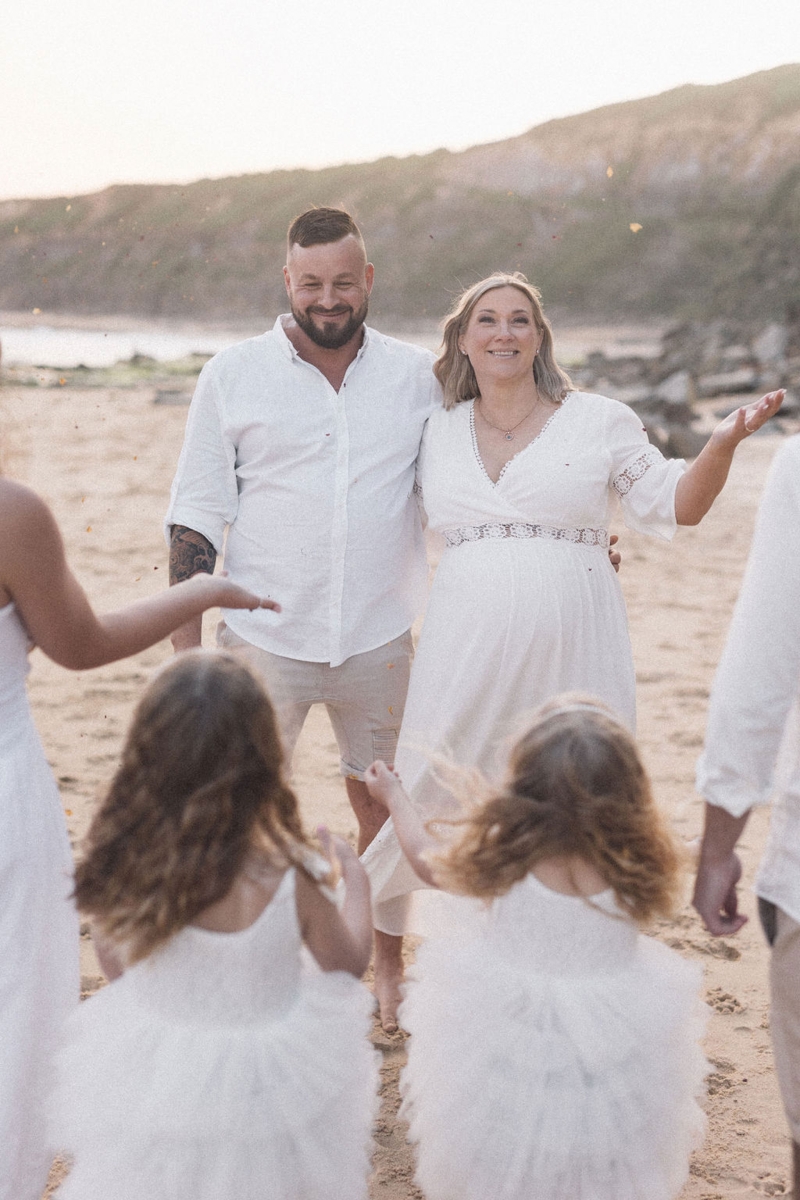
There’s something about standing with the people you love as the sky slowly changes colour that stays with you. For a few precious minutes, two transitions unfold together. The day quietly becomes night, while two people become a married couple. There’s something deeply moving about witnessing both at once.
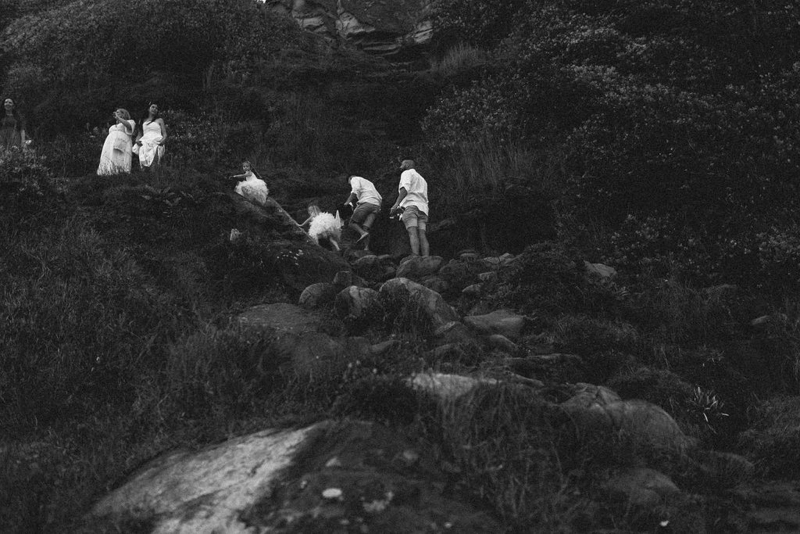
Maybe that’s why dusk weddings linger in our memories. Not simply because they’re beautiful, but because they invite everyone to slow down long enough to really notice the moment they’re living.
About the Author: Julie Muir is a warm, witty, and genuine celebrant. Better known across Newcastle and the Hunter as the Irish celebrant (the only one for roughly 1,000km). And yes, some stereotypes hold true – you’ll get the lilting accent, the gift of storytelling, and perhaps even a cheeky shot of whiskey before the ceremony starts. With over a decade of experience, Julie’s mission is simple: to create relaxed, light-hearted, yet deeply meaningful ceremonies that have guests smiling, tearing up, and feeling every emotion in between.



Join the conversation