
Have you ever thought about how we became a bunch of sops when it comes to romance? As a diehard romantic, any whiff of romantic comedy will have me planted on the couch to the final kiss, however bad the acting may be. But history tells us, marriage hasn’t always been about love but more practical matters like connections, livestock and land. Sounds cold and grey to me instead of bold red love hearts that we are now highly attuned.
Alain de Botton, British philosopher/author was in Australia this year talking all things love. In his usual wry way he’s poking fun at our largely subconscious attitudes about love and where they’ve come from. Our society’s preoccupation with romance and its follies provide an endless canvas for his witticisms but in doing so we are left to question our expectations around intimate relationships.
Our love narratives can be traced back to the Romantic period from mid 1800s. The likes of Keats, Austen and Tolstoy have shaped our attitudes of love with their ideals on what love should feel like and living happily ever after. De Botton notes the Romantic poets often didn’t have day jobs and viewed love as a kind of leisure activity enjoyed on summer evenings, preferably by a waterfall. He cheekily points out how tuberculosis often claimed them youn,g so they didn’t actually endure the perils of marriage for very long.
From this Romantic backdrop, de Botton etched out some societal views that have become synonymous with love:
#1 finding a perfect soul mate
That there is someone out there that is ‘perfect’ and you will often know the instant you meet them. This gives rise to focusing on crushes without any other information needed. No surprise Tinder is soaring. But it takes more than ‘instinct’ to decide on a life partner.
#2 no need to talk
The notion that once you’ve fallen in love, there will be ”the possibility of rapid, wholehearted understanding and empathy between two human beings”. We will find ourselves utterly understood by another without much need for explanation or communication. Mind reading is assumed and your lover should be able to intuitively understand all of you if they are indeed the one. This has lead to an outbreak of sulking as a justifiable behaviour because of course your partner should know why you’ve slammed the car door or refused to come out of the bathroom if they truly understood you.
#3 small things are beneath us
The Romantics spent little time talking about the laundry. The conversation over how to avoid stacking the dishes into a booby trap or replacing the toilet roll is basically beneath us, especially the more educated one is. Alain cites these seemingly “small issues are actually larger issues at work that that haven’t been accorded the requisite attention.”
#4 criticism is bad
That if your lover truly loves you, he/she is not going to say anything critical. I personally feel this idea puts a caveat on relationship growth. I’m not talking about malicious, spiteful content but the constructive sharing of warts and all information. Your spouse fears to tread where others won’t or your parents chose not too. I see my partner as both my biggest fan and my harshest critic. I use to shut down at the slightest criticism, now I try and bite my tongue long enough to take in something of what he is trying to articulate and respond from there.
#5 you have to love all of someone
As we struggle to be embodied compassionate souls, it is bloody hard to love everything about someone. We feel we are expected to and if we can’t, it’s some kind of deal breaker. Alain points out the Ancient Greeks were more level headed about loving only the virtues in each other, and quite comfortable with overlooking the more grisly bits of character. This doesn’t mean we stay in apathetic hell over our spouse’s less charming flaws. The Greeks saw relationships as a process of education — that lovers are both teacher and pupil in constant rotation. That pointing stuff out is not a betrayal of love rather it is actually honouring love leading us to be the best version of ourselves. I actually see that as very romantic in a loving, real way. That we can mature and improve over time and don’t have to be perfect because that doesn’t actually exist.
De Botton argues “love is a skill rather than an enthusiasm”. Accused of being anti-Romantic, it’s not that he doesn’t believe in love or marriage, a husband of 13 years. He just appreciates a dose of British ‘melancholy’ (and humour) when tackling this luscious holy grail. Relationships are our life support systems and 70% of our happiness is derived from them. We are very invested in them, so much so that we often lose our sense of humour and even ourselves.
So how can Alain’s raw advice help us de-mist our rose coloured glasses:
# What kind of crazy are you?
Admitting we are all inherently bonkers in our own way with tricky personality quirks that makes living with us not all roses. That laying it out on the table (that’s if we are aware of our craziness) could be helpful and actually deeply intimacy building. That so often we have the mirror turned fully on our spouse and their faults that we totally neglect to see our own.
#Accept a level of suffering
This word suffering gets people going. That is not how it’s meant to be. But let’s be honest folks: life is suffering as the Buddhists coined. And getting married means you chose a path of fidelity and structure, whilst staying single means you have more freedom (that also comes with its own suffering and challenges). There may be times when you may think ‘OMG, I’ve married the wrong person!’ as you react to something about them and fantasise about how your life could’ve gone. If you can honestly ask yourself: is your spouse the source of all your troubles and the answer is ‘no’ and that maybe you have something to do with your issues then maybe marriage brings an opportunity for deep personal growth.
#Importance of communication
This is not some buzz word but the foundation to all intimate relationships. That as icky as it can be when we start out, it’s worth the pain. I was so poor at this in the beginning of my relationship. I was in a murky intellectual soup every time I asked myself ‘what am I feeling?’. I finally found a book on nonviolent communication complete with a list of feelings in alphabetical order and I basically followed a script until it came more naturally. Talk about training wheels.
#Neuroscience
Scientific leaps in the past 50 years can now explain that we fall in love with people that feel familiar. Attachment Theory states that when we fall in love we are actually trying to recreate our earliest childhood memories of love. This is often why someone who is perfectly nice and wonderful is seen as boring because they may be just a bit too ‘normal’ aka no chemistry. Basically we are looking to find a partner that beautifully fits our own patterns of madness. If this sounds rather depressing in its predetermination, it’s ok right. Or It may not feel very applicable to your upbringing if your mum and dad did a stellar job, but no one gets out alive, we all inherit some personal quirky ideas around intimacy.
Maybe we set ourselves up for failure if the onus of love is all on the feeling, flighty as a galloping horse. But to approach the love venture with some reason and practical humour we may just have a chance of improving our stakes and ultimately the depth and length of our marriages.
Originally shared on Mindfully Wed, this story is now part of Polka Dot Wedding. Find out more about the move here.
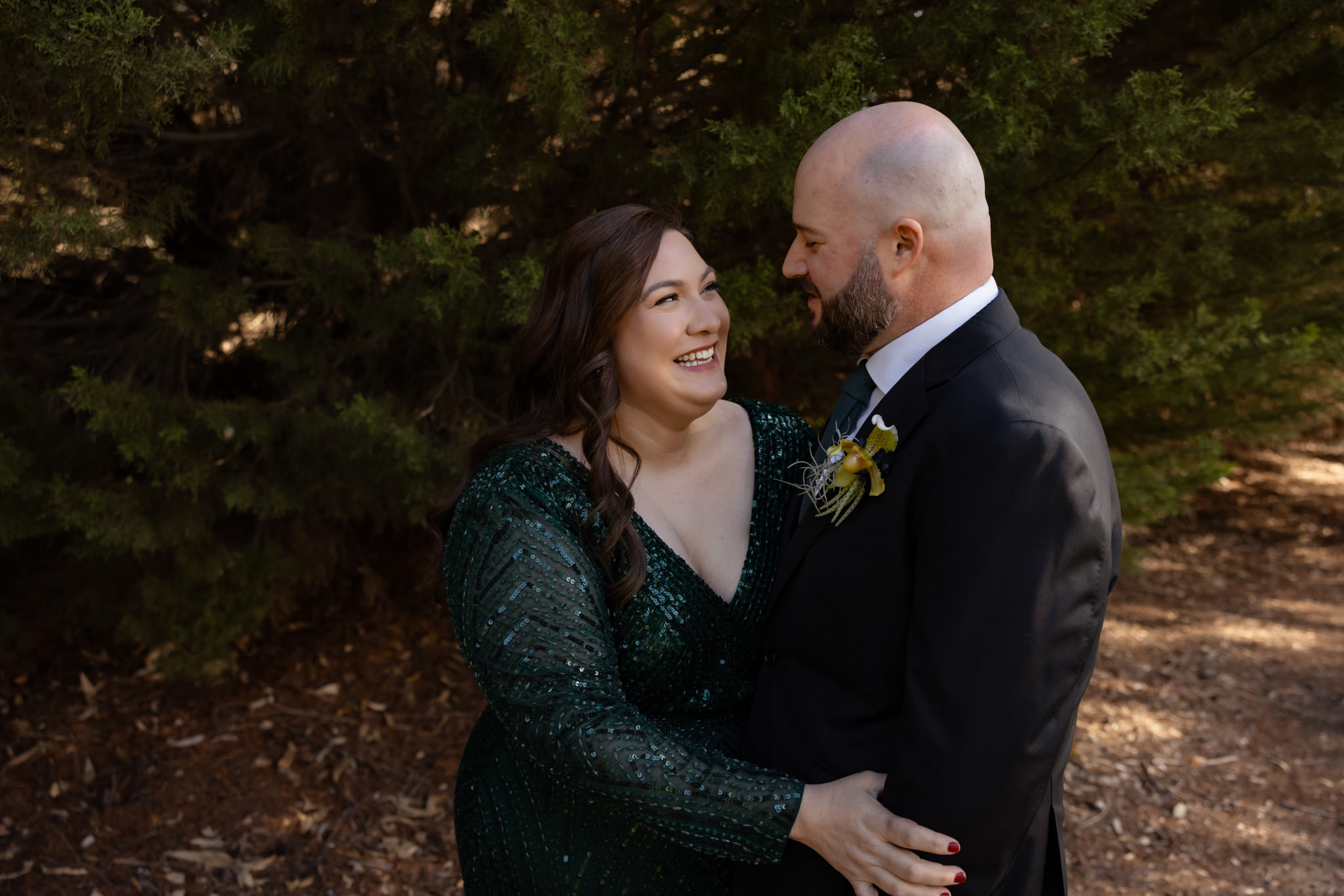
Header photo by Tony Evans Photography via Grace & Adam’s Moody Winter Wedding at Barwon Edge




Join the conversation