
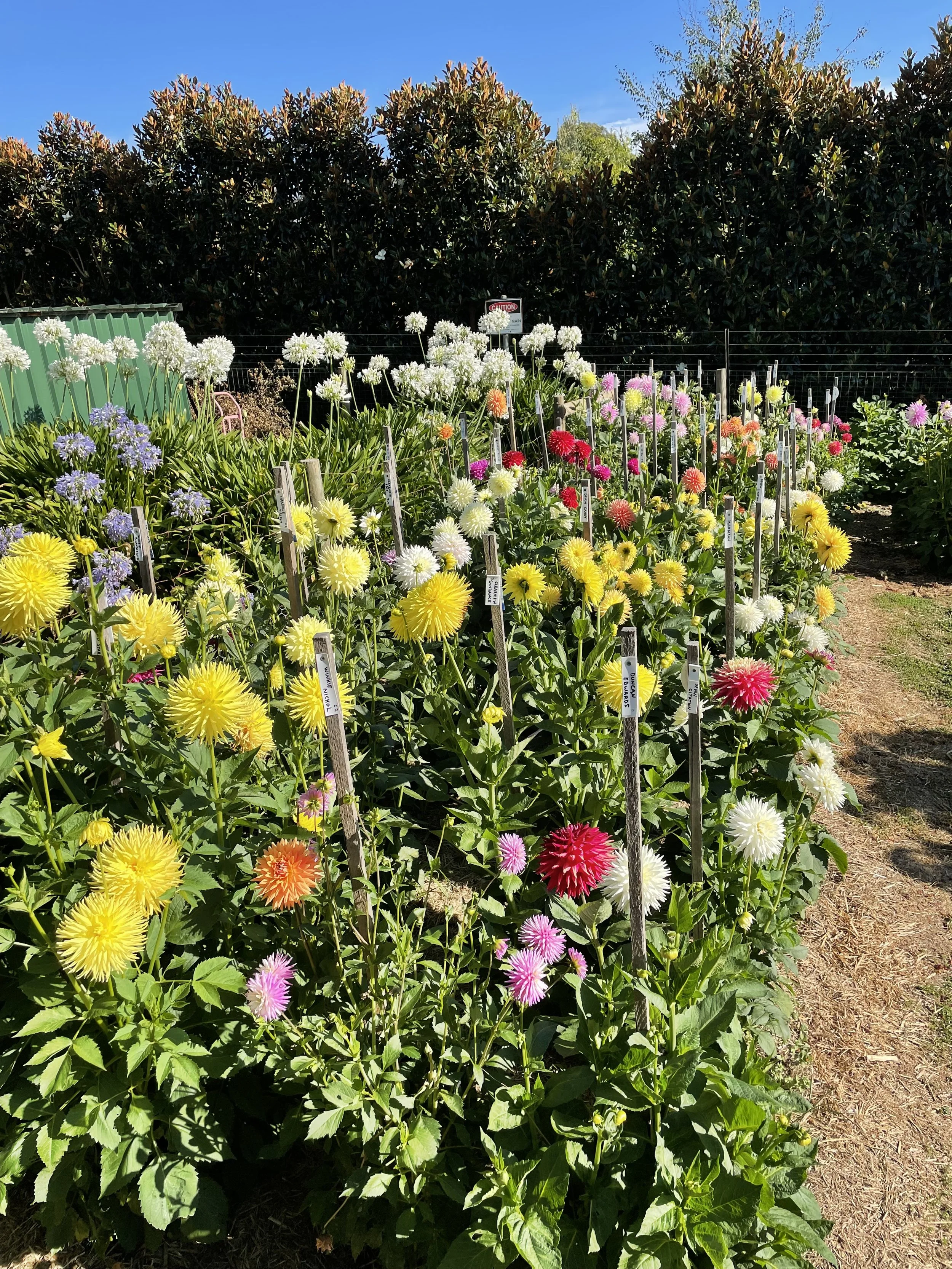
As part of the Garden Issue, we wanted to explore beyond the wedding side of things and get back to the supply chain, right back to the growers who grow those beauties that you carry down the aisle. Because while we adore florists and all that they do, there’s another part of the puzzle we rarely get to hear from, and they’re the ones who see the whole picture, from the seed and the toil before it ever gets delivered on a wedding day.
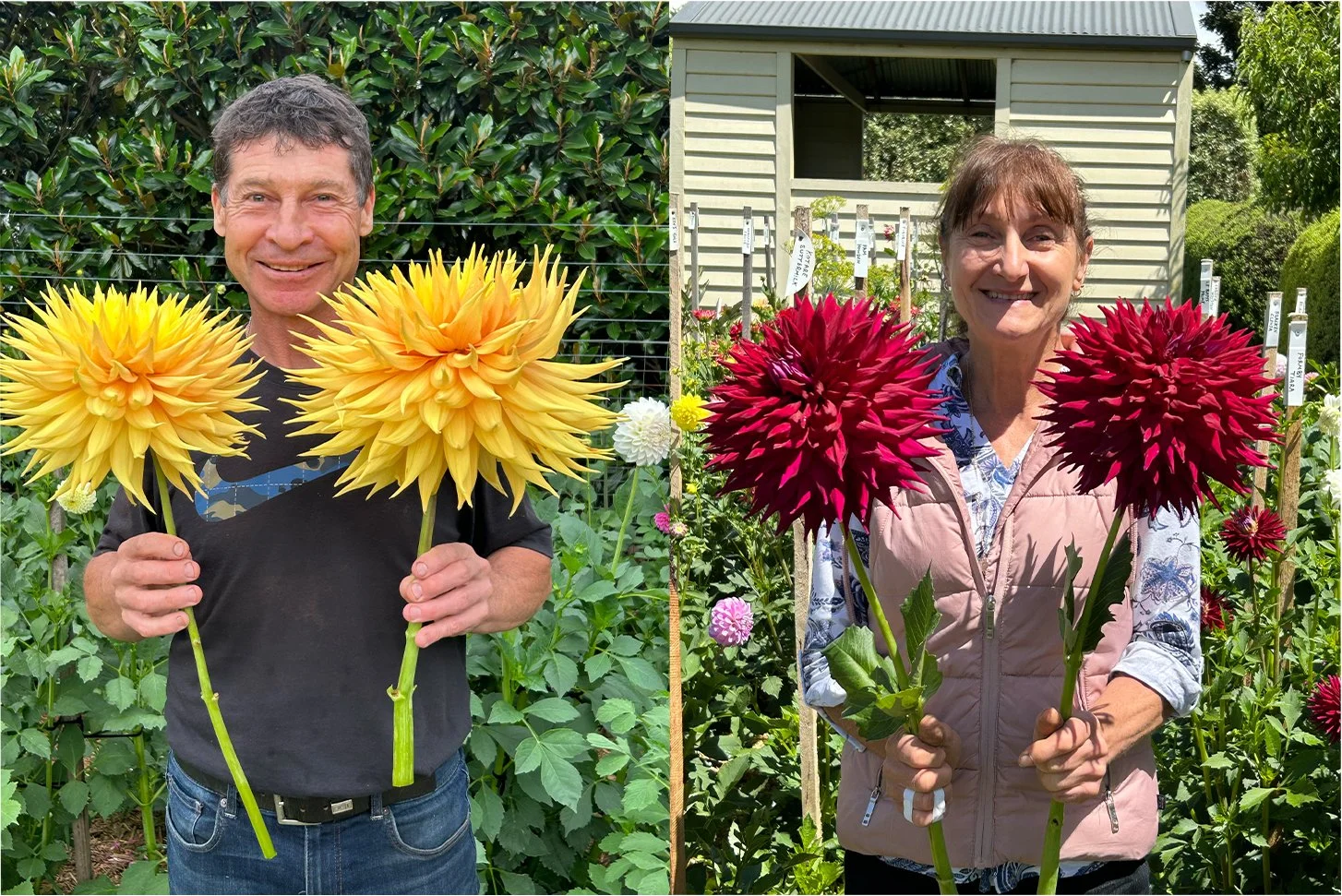
John and Vikki Rowe of Warraview Dahlias, a family-run dahlia farm in Gippsland, Victoria, know that picture better than most. At Warraview, every single dahlia is planted and dug by hand.
“It is a lot of work and often involves very long hours during peak season, however we simply love what we do. It gives us joy that others can enjoy the beauty of our dahlias.” We asked them what they wish every couple understood about wedding flowers, using their own specialty, the dahlia, as the example throughout.
In season
We talk a lot about how seasonality, and choosing wedding details based on what’s abundant and at its best, can genuinely lift a wedding. But if you choose out of season blooms, there are real pitfalls to be aware of.
“‘In season’ definitely matters, because to have flowers fresh and in season means you will have top quality Australian blooms,” they explain. Dahlias in particular come in an enormous range of varieties, colours and sizes, but if they’re not in season when a couple needs them, the flowers have to be sourced from overseas instead. “This leads to an inferior quality bloom and a higher price.”
If a couple isn’t flexible on using in-season blooms, they should expect real trade-offs. “If they’re not flexible to purchasing florals which are in season, they will be forced to accept imported, inferior blooms and pay a premium price,” John and Vikki say, with the premium covering freight, duties and any taxes payable on top. In some cases, an out-of-season or imported dahlia can cost up to five times what the same bloom would cost locally, in season.
How dahlias actually grow
Nature is the determinant here. While John and Vikki can do everything in their power leading up to and including the planting, what happens next, once the dahlia’s in the ground, is up to Mother Nature. “Growers like us put their heart and soul into growing their blooms, but they can only ‘assist’. After all is said and done, it’s the plants that do what they will, and the grower supports and assists healthy growth with nutrients and water, correct pruning techniques and protection from the elements and pests.”
In Gippsland, the dahlia season begins in October. From there, the season begins to peak. “Little bumps appear on the neck of the tuber, called an ‘eye’. This will be where the new plant springs forth from. It is from this point that the tubers are ready to plant.”
“‘In season’ refers to the peak growing season. In Victoria, the peak for dahlias is from February to early April, even though they bloom from January to end of April, possibly early May in the absence of frosts, however the blooms may have weaker stalks and smaller heads. At this stage, the plants have nearly exhausted their capacity.”
The season ends with the plant itself, and the weather. “The end of the season however is determined by two things. The vigour of the plant, and frost. Some varieties will finish flowering early, while other more robust varieties will just continue on flowering well, right up to the first frost. Frost will end the season.”
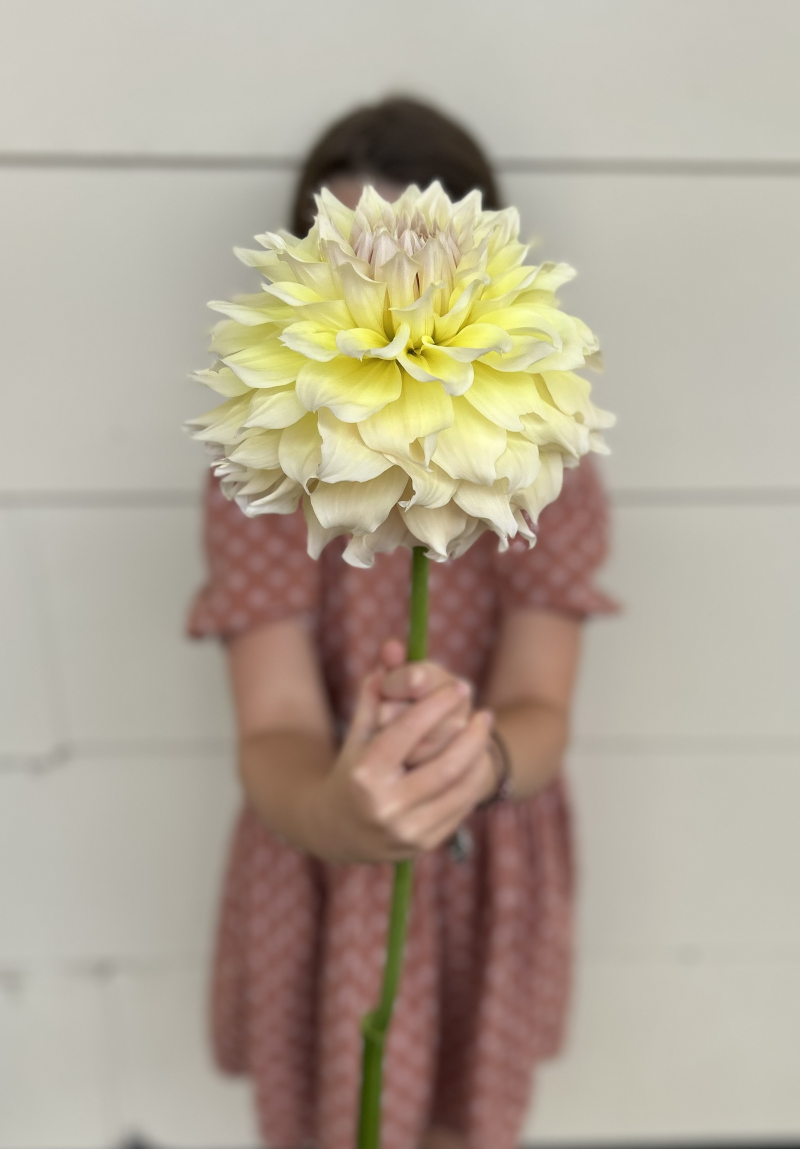
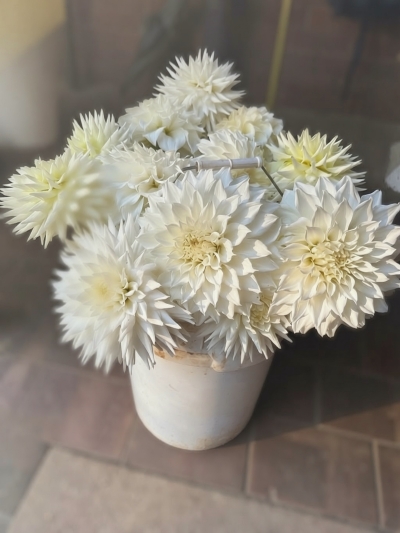
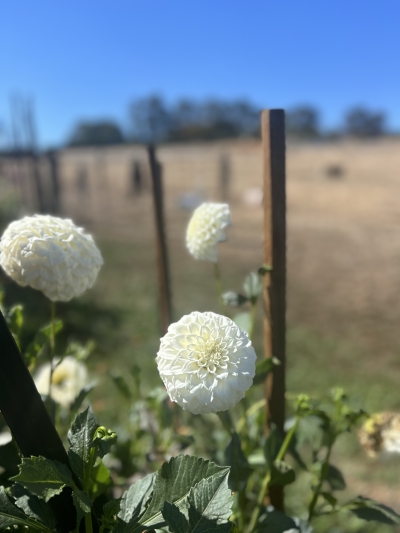
Dahlias come in plenty of different colours, but of course, white always remains a firm favourite. “White varieties are extremely prized for bridal work due to their premium appearance, symbolising femininity and purity,” John and Vikki explain. “The white varieties also mix well with colours and look very sophisticated with the addition of green foliage for contrast, which does wonders to complement a bride’s gown.”
Breeding new varieties
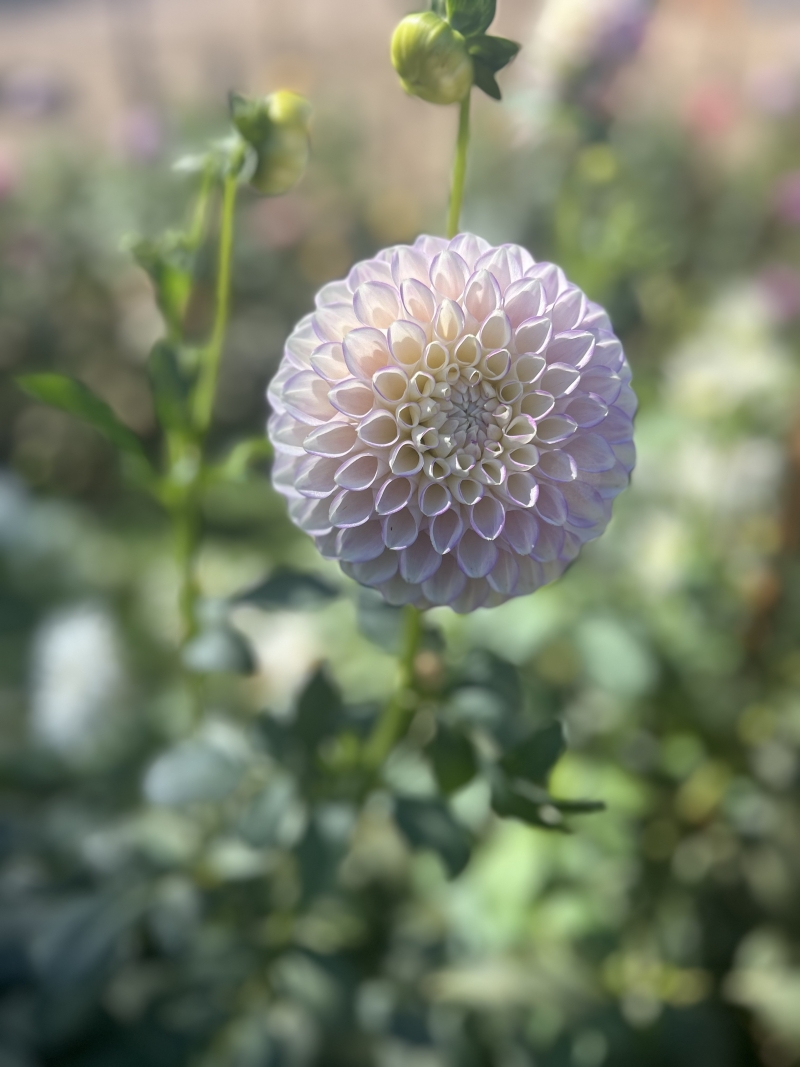
Beyond growing, John and Vikki also breed new dahlia varieties themselves, something they don’t often get to talk about. “When breeding our own varieties at Warraview Dahlias, we sometimes isolate particular plants away from the main patch to grow as a group, to encourage bee pollination. At other times, we choose to hand pollinate varieties which have been selected for their specific colour or form and strong stems.”
Unlike seeds, tubers grow true to form, which is why breeding a stable new variety takes patience. “Tubers are true to form whereas growing from seeds is not. It is here that new varieties are selected. The process can easily take four years until the variety is released. Waiting for the plant to stabilise and make sure it will perform true to form each season is important. When we are satisfied the plant will do so, we will prepare to release it by taking multiple photos from different angles to show off the new cultivar and build up some stock.”
What growers wish clients understood
If there’s one thing John and Vikki wish every couple knew before requesting dahlias out of season, it’s simply to check first. “Customers should always consider if dahlias, or any other Australian flowers, are in season. By selecting blooms in season, they can expect the flowers to be at their peak, be more robust and last longer. We suggest customers do some research first, especially with growers like us at Warraview. We offer access to a great eClub with tips and advice.” Ultimately, if a couple is committed to a particular flower, the date might need to give way instead. “Customers may need to either choose a different date for their celebration, or heaven forbid, choose a different flower.”
Talking to your florist
If you’re looking for and wanting local, in-season dahlias, and flowers in general, it pays to be prepared with the right questions. “If couples want to be sure they’re purchasing local product, they need to ask specific questions, ask for origin information from flower suppliers or florists,” John and Vikki advise. “Sometimes innocent store staff don’t actually have information around origin of flowers in store, so it’s important to ask the right questions.” It’s also worth knowing that even flowers that are technically in season aren’t always sourced locally. “Some retail florists still purchase imported flowers from wholesalers. These are mass produced and grown to save costs, so even if, for example, long stemmed red roses are in season, what customers see in store may in fact still be an inferior, imported variety.”
It’s easy to fall in love with a flower and never think about where it came from, or the years of trial, patience and hand labour that got it there. Thank you to John and Vikki for pulling back the curtain and giving us a glimpse of the supply chain behind the bloom.
About Warraview Dahlias: Warraview Dahlias is a thriving family business based in Gippsland, Victoria, run by John Rowe and his wife Vikki. A long-time enthusiast, John has been growing and collecting dahlias since 1990, fascinated by the breadth of form, size and colour dahlias offer. After joining the Victorian Dahlia Society in 2017, John was introduced to the world of showing, which took his passion for dahlias to an entirely new level.
It’s from this place of passion that John and Vikki’s work with dahlias has grown. John spends time breeding and producing new dahlia cultivars, and together they grow unique varieties for the show bench, cut flower market, weddings and events, and the home gardener and collector alike. The aim? Simply to “put a smile on as many faces as possible, as these beautiful blooms come to life.” Join the Warraview Dahlia eClub for tips, shows, news and more, or follow along on Instagram.


Join the conversation