

The After Dark Issue makes space for the parts of weddings that rarely get talked about honestly. And few things are harder to navigate than deciding who does (or doesn’t!) make the guest list. Deciding who to invite sounds simple on paper. Names, numbers, meal choices. But for many couples, each name carries a history and sometimes even pain left unspoken. And some of the hardest decisions aren’t about who to include, but who to leave off.
Kimberly Freeman, registered counsellor and grief and loss specialist at Shifting Perspective Counselling, , writes about navigating family estrangement, setting boundaries, and making peace with a decision that others may not understand.
At first glance, the planning can look simple. Names, numbers and meal choices. For many couples, though, each name can carry a history. Old hurts, broken promises, strained phone calls and a quiet ache. Deciding who to invite based on numbers is one thing, but it’s another completely when choosing not to invite a parent, sibling or grandparent because of family conflict and estrangement.
We often think of family estrangement as occurring from a single explosive event that fractures a relationship, but more often, the disconnection comes from years of criticism, conflict, hurt feelings and unmet needs. It’s the small moments, when we’re made to feel less than, where the estrangement lives. A wedding doesn’t make any of these feelings go away. It usually amplifies them.
The hardest part of these types of relationships rests in the grey area. A quick phone call or text for birthdays, the expected yearly get-together during a holiday, the ability to be in the same room as long as certain topics aren’t discussed. The parent who can’t be trusted to behave on the day, or the contact that comes with conditions. Warmth when you perform to their expectations and a certain coldness when you don’t. The relationship doesn’t exist in the real-life moments in between. These long-avoided relationship dynamics are now unavoidable. A yes or a no to a wedding invitation takes something ambiguous and defines it, without any clear script.

The grief we experience in these relationships is often a form of ambiguous loss, a term developed by family therapist Pauline Boss. It doesn’t always come from someone being physically absent, but from the loss of the relationship we needed or wished we had. It might be the supportive mother through childhood, excited to help pick out the dress, or the protective father who would have walked you down the aisle or shared in the first dance. The grief comes from not having the relationship and from having to be the one to define it. Just because they’re family doesn’t mean they can offer the safety or care needed on such an important day. A title doesn’t define a relationship, nor does it come with automatic access or respect.
Some people, even with the best of intentions, may question the decision, putting pressure on the couple to ‘keep the peace’. There are a few guilt-inducing phrases that may come with making a decision like this, “you’ll regret it someday,” and wondering, “what will people think?” A wedding invitation shouldn’t come from feelings of obligation or guilt. The decision isn’t for the people watching, it’s for the people beginning their life together.
For couples sitting with this decision, it can help to slow down and separate the relationship itself from the guilt and the pressure from other people. A few steps can help to reduce the stress around this choice. First is to set a boundary to help decide what you are willing to engage with. Is the boundary that the person isn’t invited, or that you aren’t discussing it with others? Setting a boundary doesn’t require everyone to agree with it. Second, explore what you’re afraid might happen. Are you afraid you’ll be seen as cruel or petty? Dramatic? Ungrateful? This can help you notice whether you’re making the decision from values or guilt. Third, prepare your response. Something like, “I know it might be hard to understand, but this decision wasn’t made lightly,” or if someone keeps pressing, “I’m not going to be explaining our decision, let’s move the conversation on.” Having a response ready can reduce the urge to over-explain or invite debate.

The guilt we experience when deciding not to invite someone isn’t coming from wanting to cause harm. It comes from violating a societal expectation. But the expectation should be reserved for someone who shows up, someone who is respectful and trustworthy. The person who would have belonged on the guest list without a second thought. The grief in this moment really isn’t so much about the invitation; it’s the gap we feel between the person we have and the person we needed.
One of the hardest parts of creating the guest list while managing family estrangements may not lie in creating the list itself but in giving ourselves permission to make a decision that others may not understand or agree with. Not inviting someone doesn’t mean the decision was made lightly. It may simply mean you are choosing emotional safety and peace with people who genuinely support you. Your wedding day, with your guests, shouldn’t be shaped by obligation but by love, care and the beginning you would like to have together.
Reference
Boss, P. (1999). Ambiguous Loss: Learning to Live with Unresolved Grief. Harvard University Press
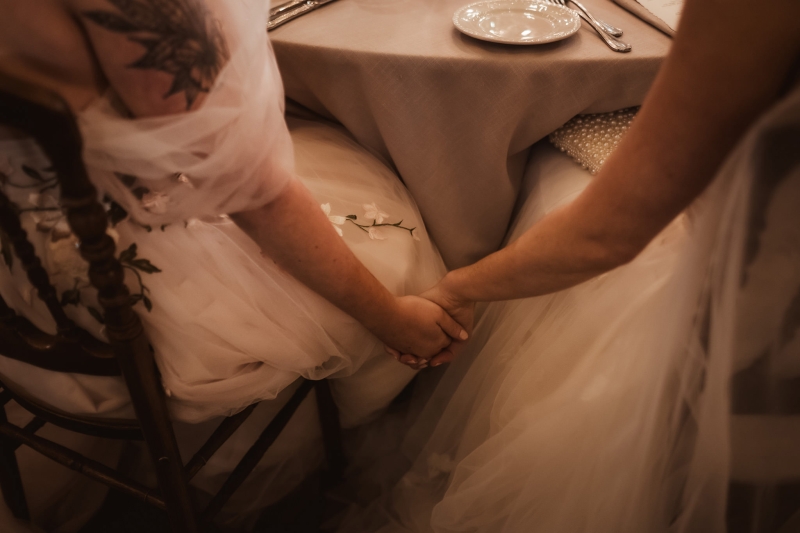
Images used throughout this post by Fiona and Bobby Photography via Jeanne & Beth’s Enchanting Wedding at The Grounds of Alexandria




Join the conversation