
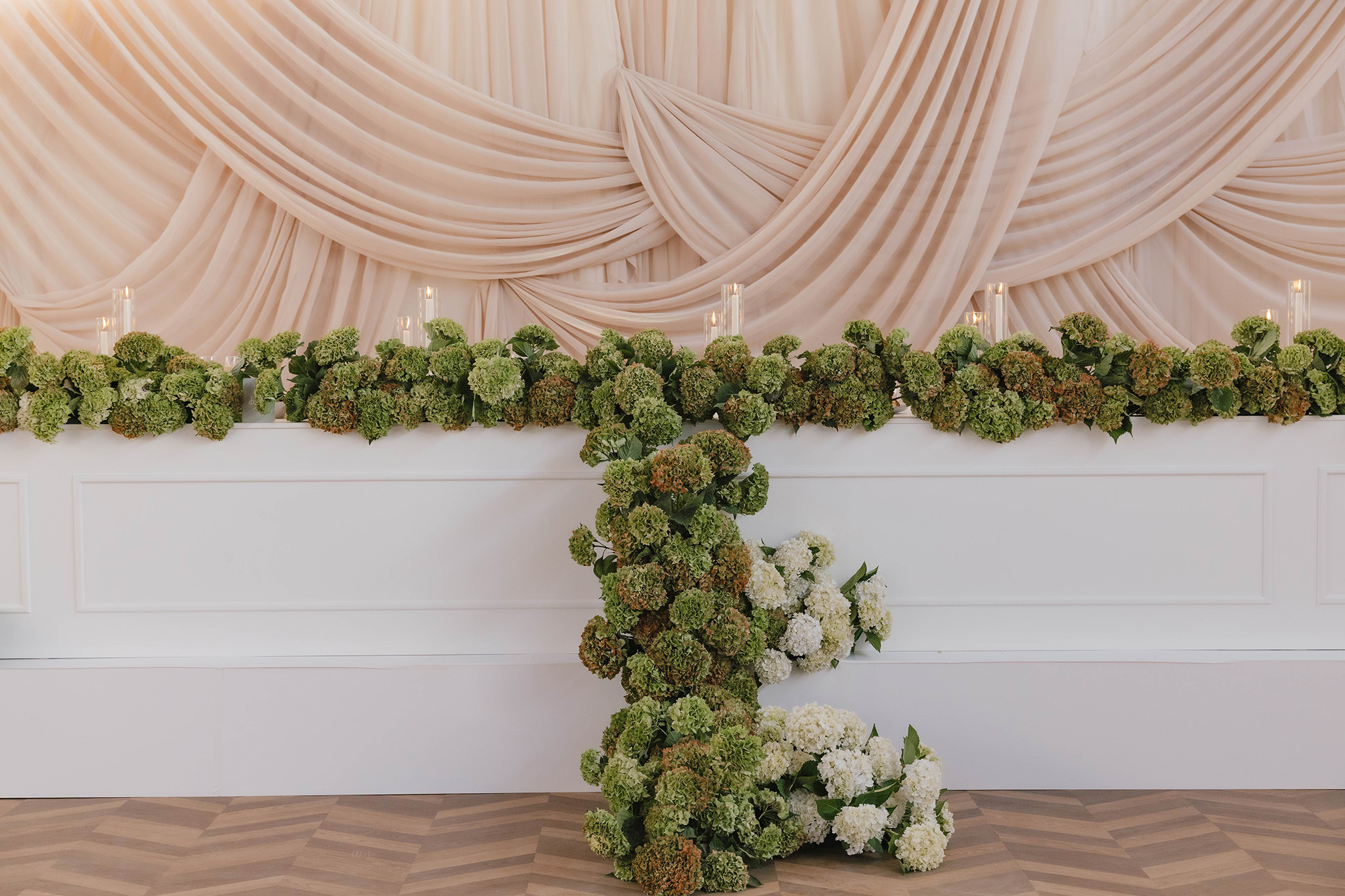
Every couple starts their floral planning the same way, a folder of saved images and a budget that has no real relationship to any of them. Pinterest doesn’t tell you what anything costs. A stunning reception table could be four bud vases or four thousand dollars of imported blooms, and you’d never know which from the photo.
Kate Hill has been designing wedding flowers in Melbourne for 28 years. Founder and creative director of Kate Hill Flowers, she’s known for refined, contemporary floral design built around what a couple actually wants their day to feel like. Here, she shares her honest take on getting the most from your flowers, whatever your budget looks like.
I fell into floristry in February 1998 when I helped a friend in her flower shop over Valentine’s Day and I genuinely fell in love with flowers. Kate Hill Flowers followed in 2007 so I’ve now been designing wedding flowers for 28 years.
What still excites me most is working closely with couples and bringing their vision to life. I love walking into a venue and transforming it into something that feels entirely personal to them, while considering every element already in the room, from the architecture and lighting to the linen, stationery, fashion and season. From there, it becomes about understanding what the flowers need to contribute to make the whole celebration feel beautifully resolved.
There is also something very personal about a bridal bouquet. After all these years, I still feel the responsibility of handing that bouquet to someone on one of the biggest days of their life.
Wedding patterns we used to rely on have shifted so much. Some couples are being incredibly considered with smaller budgets, while others are choosing to invest deeply in a few meaningful areas. Flowers have such a strong visual and emotional impact, but couples often need honest guidance on where to place their budget so it works beautifully for the day.
Put your budget into one or two areas, not everywhere
I usually start with 3 main areas: the bridal bouquet, the ceremony or the reception florals. Whatever area means the most to the couple.
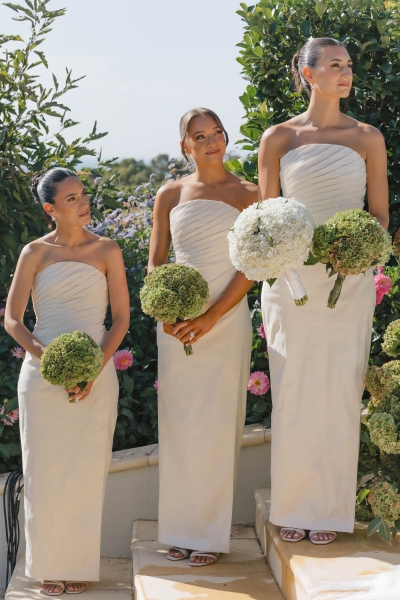
Your bouquet is with you for majority of the day and appears in an enormous number of photographs, so I would always make that a memorable statement piece. Most of our brides now are opting for a designed bouquet or a bouquet inspired by their mother’s or grandmothers’ bouquets.
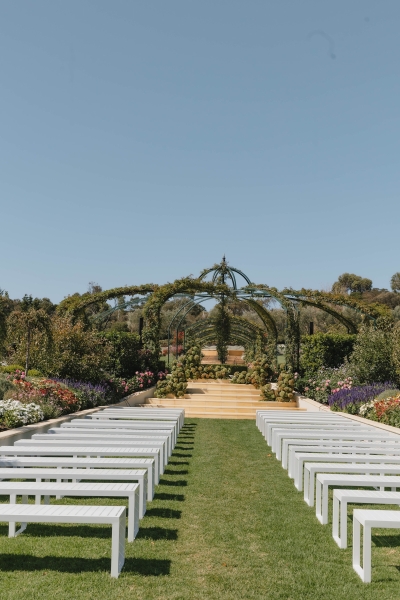
Then choose one ceremony moment with impact. A custom installation design piece to feature at the ceremony. It could be an arrangement framing the couple, beautiful plinth designs or flowers around an existing architectural feature. That becomes the backdrop to the part of the day everyone has actually come to witness.
For many of our couples, the reception is where they really want to go all out. This is where flowers can completely transform a room, from the guest tables and bridal table to the bar and focal architectural moments. It is also where everyone settles in for the evening, so the flowers become part of the atmosphere and experience of the celebration, not simply decoration.
I would rather invest properly in the reception and create a room that feels considered, generous and memorable than dilute the budget across lots of smaller elements that have less impact.
Don’t spread flowers across every small surface
For me, it is less about saying there are things couples should never spend money on and more about making sure the budget is going towards the areas that will have the greatest impact and reflect the couple.
It is very easy to start adding flowers to every sign, every cocktail table, every bathroom and every small corner of the venue. Individually those details may not seem significant, but together they can absorb a surprising amount of the floral budget.
If the budget is finite, I would much rather pull some of those smaller pieces back and put that investment into the reception or another key floral moment where it can genuinely transform the space, and make greater impact.
With a generous budget, those smaller details can be beautiful and help create a very layered experience. But they should feel intentional. I do not believe in adding flowers simply because there is an empty surface or because it is something weddings traditionally have.
Sometimes one exceptional floral moment will be remembered far more than ten smaller arrangements.
Repurposing can save money, but only if it’s planned from day one
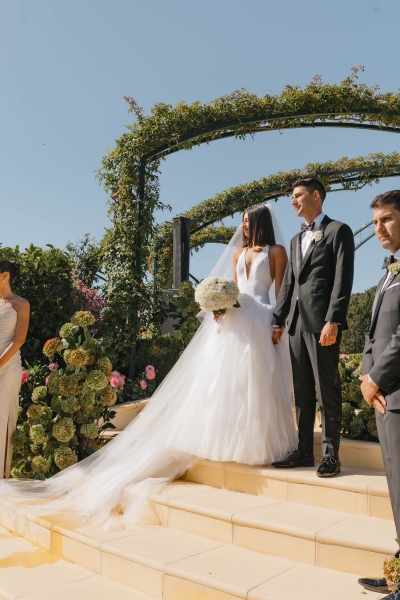
It is more complicated and layered than you think! Repurposing absolutely can save money but only when it has been planned properly from the beginning, and only if the ceremony and reception is in the same venue. And timing is everything when transferring and repurposing designs.
A beautiful ceremony arrangement designed in a vessel or on a movable base can sometimes become a bar arrangement, sit behind the bridal table or move to an entrance after the ceremony.
The complication is timing, weather and expectations. Quite often the ceremony finishes at exactly the point the reception room needs to be completely ready. Moving a large floral installation can require additional florists, vehicles and labour and some installation pieces simply aren’t designed to be moved safely.
So I wouldn’t automatically assume repurposing equals free or cost effective.
Tell your florist early that you would like to repurpose and they will plan the concept with that in mind. We can then design the mechanics, scale and placement around that intention and tell you honestly whether the saving is worthwhile.
A photo doesn’t tell you what something costs
Very gently, because they haven’t done anything wrong. Images are inspiration only and a guide of style. If couples want exactly what images they share, their budget needs to reflect that.
Pinterest and Instagram are wonderful creatively but a photograph doesn’t tell you what something cost. You might be looking at thousands of stems, custom structures, several florists working for days, trucks, rigging, installation crews and a midnight pack-down.
Rather than saying, “You can’t have that,” I try to understand what they actually love about the image.
Is it the colour palette? The abundance? The flowers growing from the floor? The single variety used en masse? The feeling of being surrounded by flowers?
Once we understand that then we can often translate the feeling into something appropriate for their budget without pretending we can recreate a $20,000 installation for $3,000. I am a very honest and realistic wedding florist who guides couples honestly through the journey.
My advice is to establish a realistic floral investment fairly early. Inspiration is much more enjoyable when you understand the scale you are working within.
Giving your florist real creative freedom, rather than a strict list, makes an enormous difference too. The couples who usually get the very best value give us a clear direction, rather than a shopping list of exact flowers. Our clients come to us for our style, skill and expertise and give us creative freedom within their brief so we are well aligned. Giving your florist freedom within an agreed palette and aesthetic allows us to buy what is genuinely beautiful at the market that week. That can absolutely make a budget work harder.
Fewer varieties, used well, beats more flowers
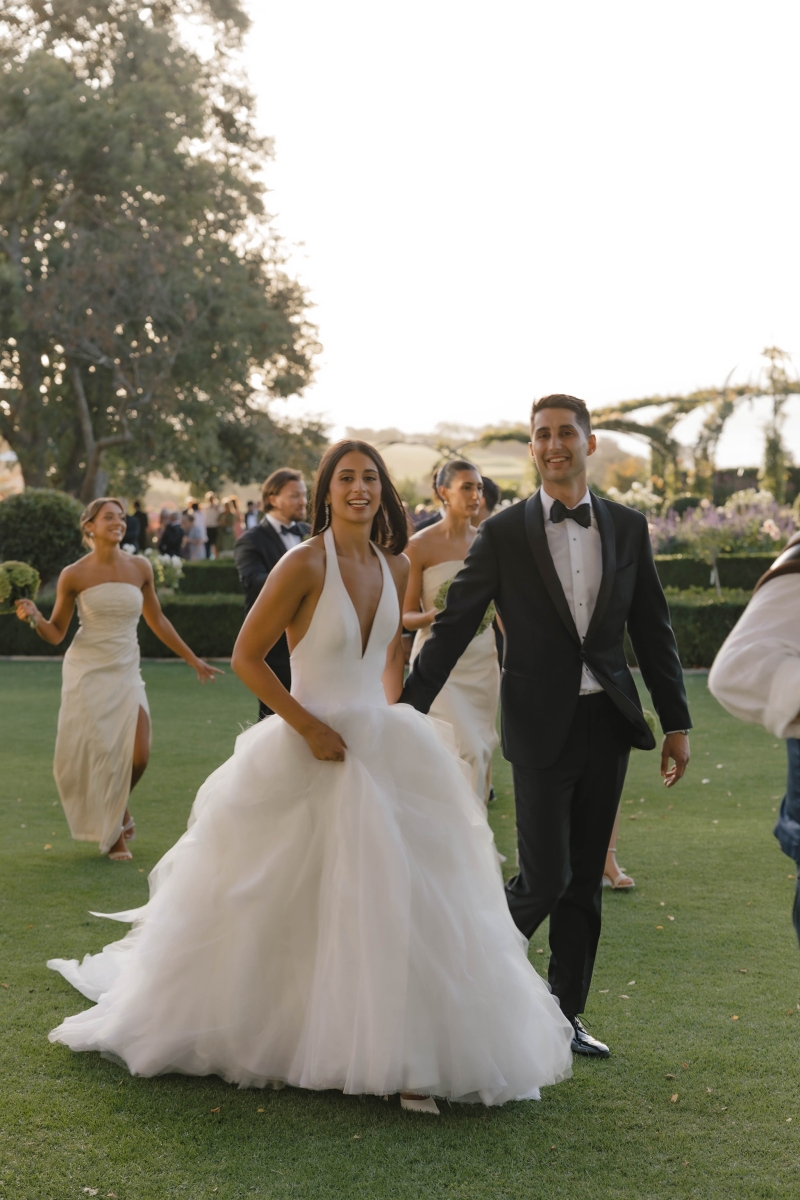
Grouping with one flower on mass is one of my favourites.
Instead of mixing ten varieties evenly through an arrangement, we might group roses together, orchids together or use one beautiful seasonal flower en masse. It feels deliberate, contemporary and luxurious. It takes skill and style to pull it off and that’s what we do effortlessly.
Seasonality is another. Flowers that are abundant and naturally at their best tend to give you more beauty for your money than forcing something out of season.
Scale can also come from foliage, interesting branches, beautiful vessels and considered placement. You don’t necessarily need thousands of flowers.
And repetition is powerful. Twenty simple bud vases running beautifully down a table can have much more presence than four unrelated arrangements.
The secret isn’t necessarily more flowers. It is stronger design decisions.
Tell your florist how you want the day to feel, before the numbers
I would love every couple to answer along the lines of how do you want the wedding to feel?
Not what flowers do you want. Not what did you save on Pinterest. How do you want the room to feel when you walk into it?
Then tell me the three things that matter most to you.
Perhaps the bouquet is incredibly important because flowers have always meant something to you. Perhaps the ceremony needs to feel extraordinary. Perhaps you love entertaining and want your guests sitting amongst beautiful flowers all evening.
Once I understand those priorities, the budget conversation becomes much easier because we can allocate the budget according to what actually matters to that couple.
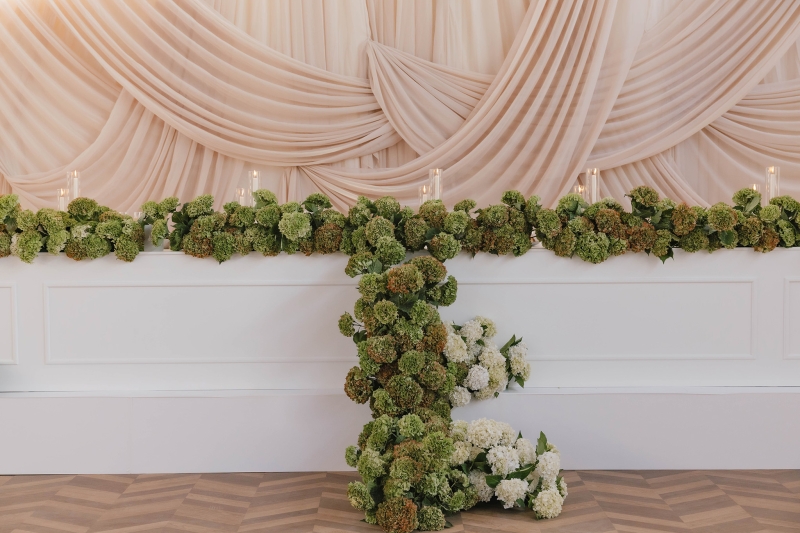
Restraint can still look elegant
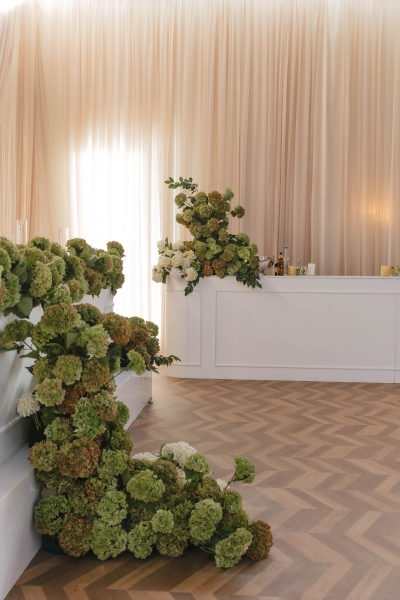
Some of the most beautiful smaller-budget weddings we’ve created have been incredibly restrained. We styled so many “micro” weddings during Covid which were insanely beautiful and is where the “minimal” wedding style trend was born from.
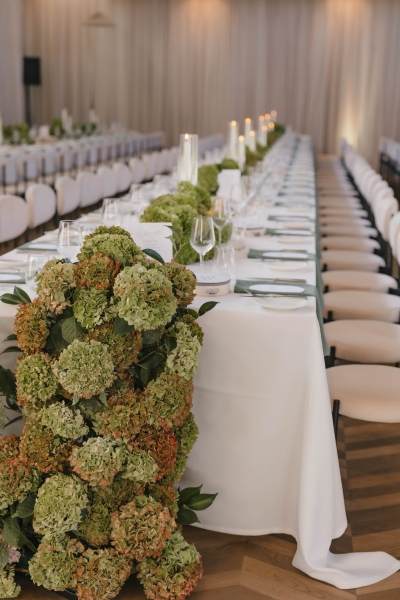
One approach that works particularly well is a beautiful bridal bouquet, no flowers for the bridal party, a custom ceremony moment, then repeating a single design language across the reception tables.
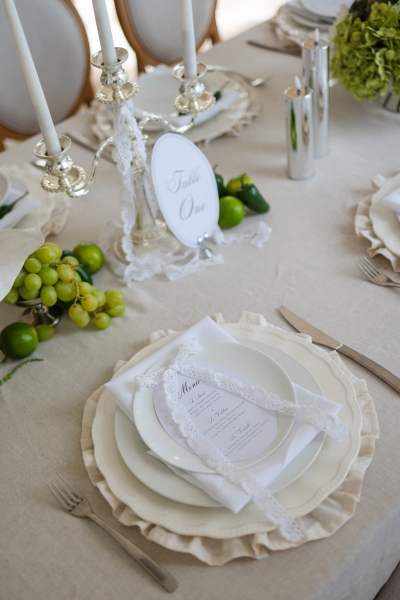
Bud vases are a good example for a long table setting. Rather than creating a large arrangement for every table, beautiful seasonal stems repeated down long tables can feel abundant without becoming overly complicated.
The key is cohesion. We haven’t tried to make a modest budget do the job of a huge one.
Everything belongs together, the palette is controlled, the varieties are carefully chosen, and nothing feels like it was added simply to fill space.
That confidence and restraint can make a wedding feel incredibly elegant.
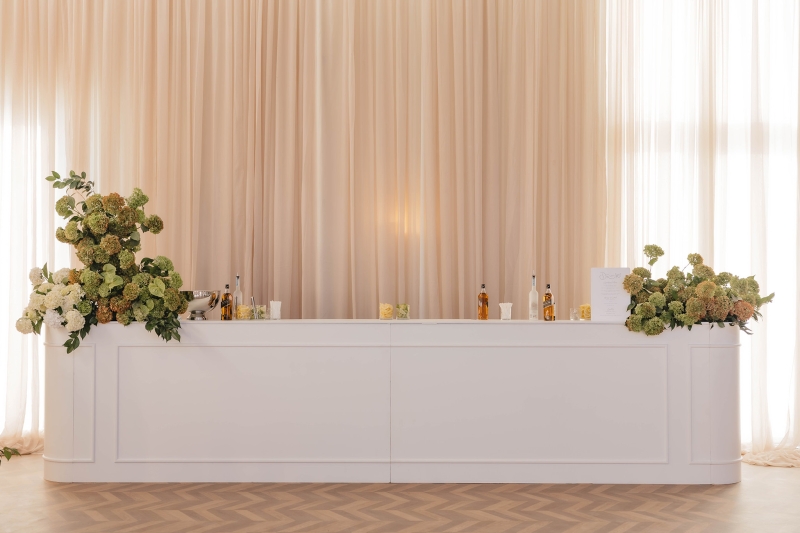
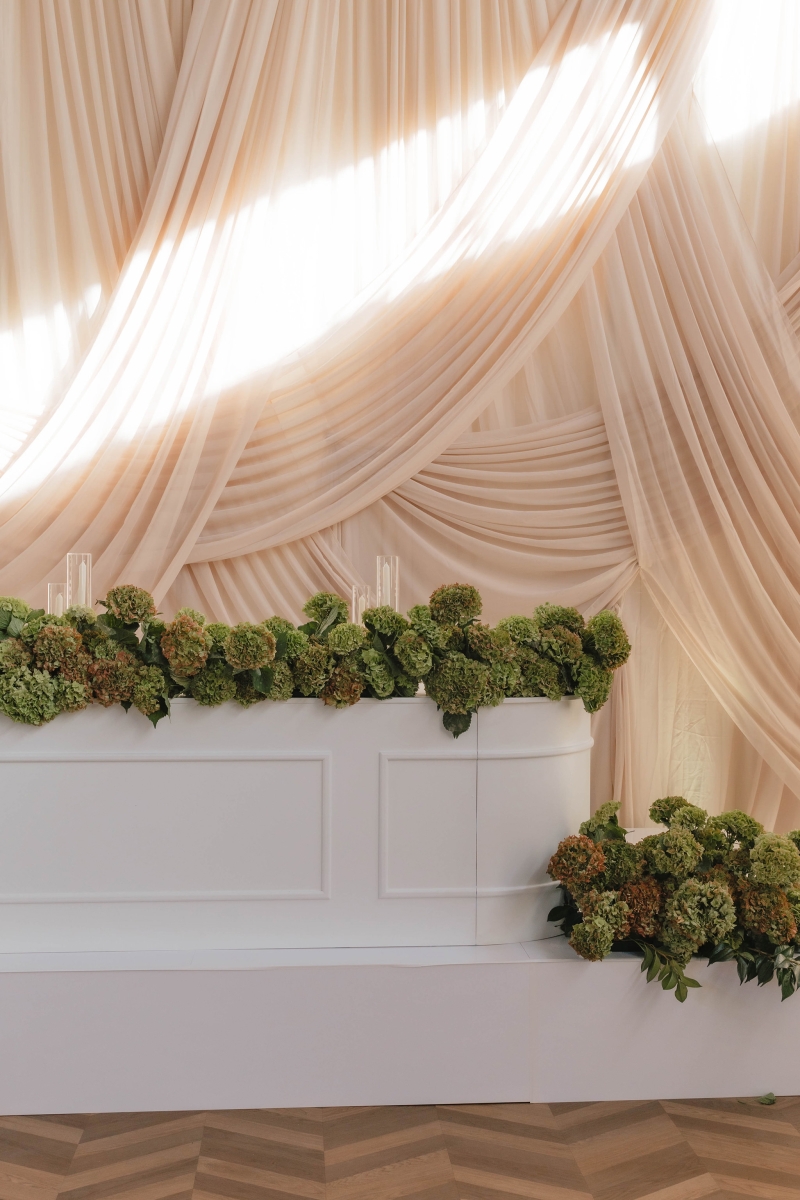
Don’t compare your budget against 200 saved images at once
Couples are far more visually informed now. Twenty years ago somebody might arrive with a magazine clipping or a printed image. Today they can arrive with 200 saved images from weddings all over the world.
That is creatively wonderful but it can also make understanding cost much harder because everything appears together on the same screen regardless of whether the wedding cost $30,000 or $300,000.
I think couples in 2026 are also more conscious about where their money goes. They ask better questions about priorities, repurposing and what will genuinely make a difference. And I actually like that.
The best conversations aren’t necessarily about spending less. They’re about spending intentionally.
There is also greater understanding now that floristry isn’t simply the retail cost of a stem. There is design, preparation, conditioning, vessels, mechanics, delivery, installation, labour and often pack-down behind what guests eventually see. So couples need to understand there’s more within their budget than just flowers.
Special and expensive aren’t the same thing
Please don’t think that beautiful wedding flowers automatically require an enormous budget. Special and expensive aren’t the same thing.
Start by telling your florist what you genuinely love and what matters most to you and what you are comfortable spending. A good florist should be able to tell you where that money will have the greatest effect.
Be prepared to prioritise. Be open to seasonality. Allow some creative freedom. And don’t feel that you need flowers everywhere.
Ultimately, your flowers should feel like your wedding, not somebody else’s Pinterest board. That is usually when weddings become unforgettable weddings.
About the author: Kate Hill is the founder and creative director of Kate Hill Flowers in Melbourne, established in 2007. She fell into floristry in February 1998, helping a friend in her flower shop over Valentine’s Day, and has now been designing wedding flowers for 28 years.
Photos by Bianca Virtue.


Join the conversation