
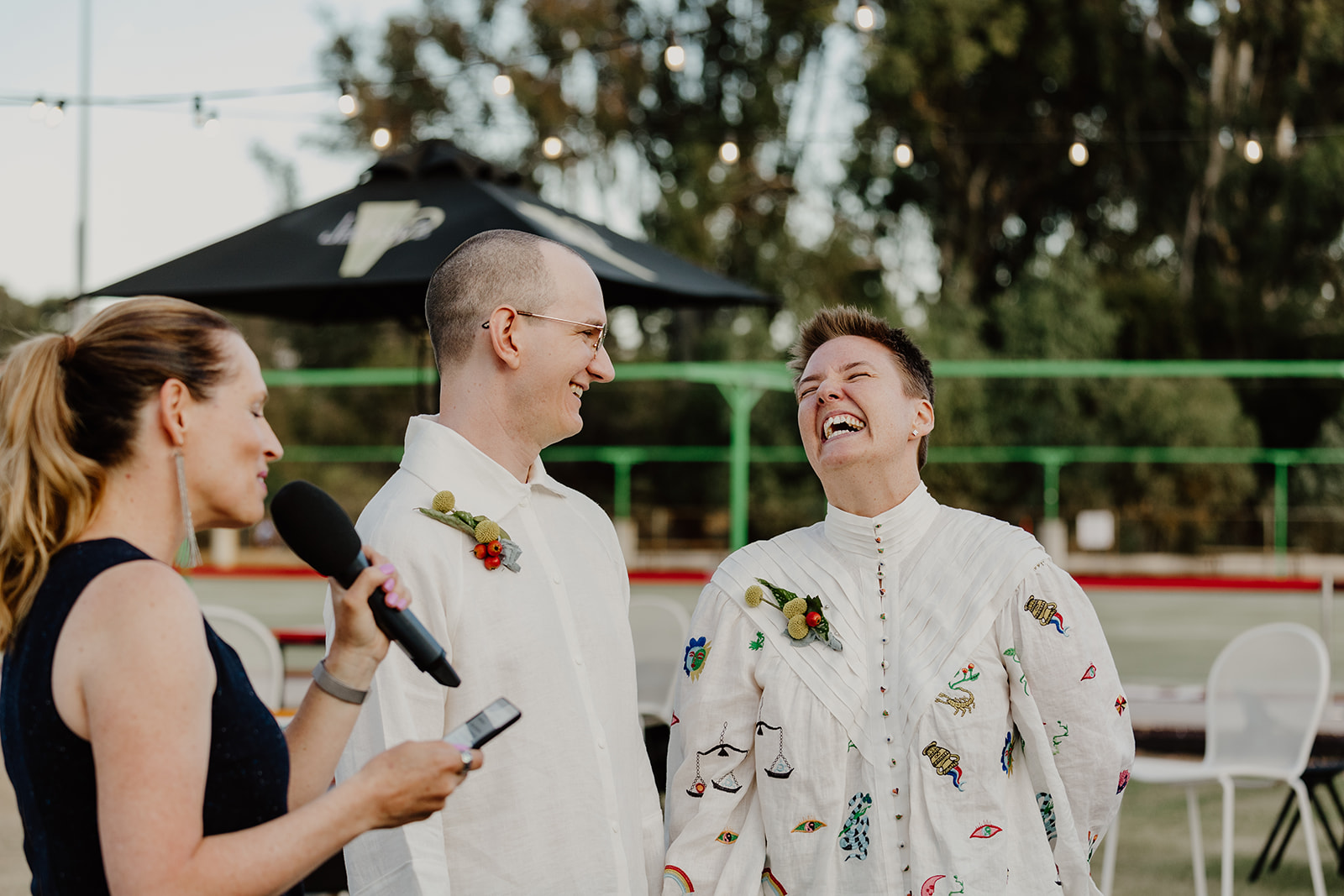
As part of The Mindful Issue, we asked Sally Bruce, a marriage celebrant specialising in non-traditional weddings in Perth and south-west Western Australia, to share her perspective on intentional ceremony planning. Sally works with couples to strip back the noise and make deliberate choices about what actually belongs in their day. What she has to say might surprise you.
As a marriage celebrant specialising in non-traditional weddings, what I want you to know is this: everything you’ve ever seen in a wedding ceremony is optional.
Ok, there are a few legal elements that need to be included if you want to be legally married at the end of it, and please note that as a civil celebrant, I’m only talking about civil wedding ceremonies here. Religious wedding ceremonies will of course have their own non-negotiable requirements.
The decisions you don’t realise you’re making
When someone says “wedding”, what do you imagine? There are definite expectations around what a wedding should include.
We’re all influenced by cultural references about weddings. My own wedding was in 2002 and for me it was books, movies and TV shows, plus two hard-copy bridal magazines I was given. For current couples stuck in the algorithm there are millions of pieces of content bombarding you with trends upon micro-trends.
And so couples feel overwhelmed. Usually they’ve never planned a wedding before, and it’s easiest to just download a wedding planning checklist and follow the steps through. They’re making decisions without realising it, because they don’t realise they have a choice.
But everything is optional, remember?
That means you don’t have to:
- Wear particular clothes, eg white dress, suit
- Carry or wear flowers
- Hire or decorate a venue
- Have any guests (except the two legally-required witnesses)
- Seat guests
- Have a wedding party
- Arrive in a fancy car
- Have music
- Walk down an aisle
- Have a reading or poem
- Say “I do”
- Speak any vows (other than the short legally-required wording)
- Exchange rings
- Provide food and drinks
- Cut a cake
- Have toasts
- Make or listen to speeches
- Get married on a Saturday afternoon
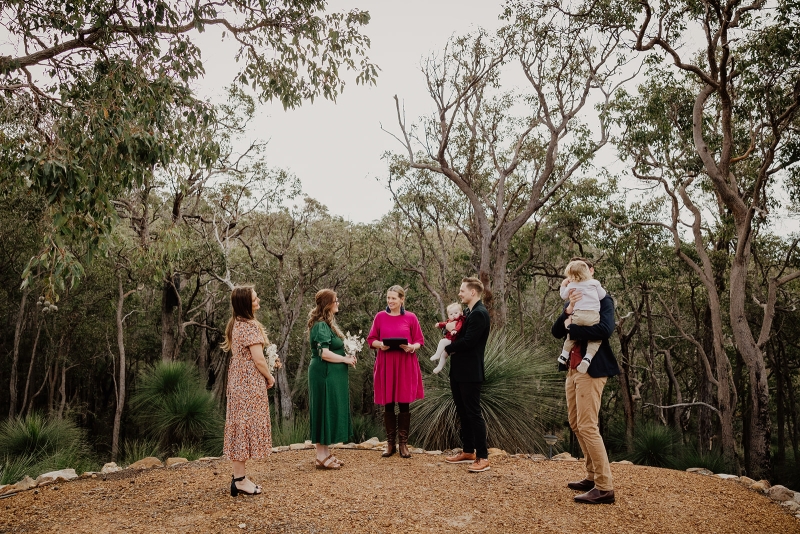
Cara and Rick – You don’t have to get married on a weekend – this couple married on a Monday at the holiday house they were staying at with just two friends and two babies as guests
Weddings are always evolving
Wedding ceremonies outside of a church or Registry Office only became an option in Australia in the 1970s. Many civil wedding traditions are simply transplants from a Christian church wedding ceremony, eg walking down the aisle and saying “I do”. Couples can incorporate wedding traditions from their own cultural backgrounds, and marriage equality has allowed couples to create new traditions that are a better fit for their relationships.
Tradition vs intention
When planning a ceremony there’s often talk of “tradition” as a reason to do something, or in the case of non-traditional weddings, not doing it. Rather than just including or excluding things for tradition’s sake, I’m interested in intentional decision making. This means considering each ceremony element, assessing what it means to you, and then choosing whether it belongs in your ceremony.
When I’m working with my couples to co-create their ceremony, we start with the scaffolding of the essential legal aspects and add individual elements from there. I remind them all the time that everything, and I mean everything, is optional. If you’re sweating over the guest list, surely it’s also worth considering which elements get an invite to your ceremony?
Understanding the difference between getting married and having a wedding
Getting married is a fairly simple legal process involving an eligible couple, an authorised marriage celebrant and some paperwork.
If we strip away anything not legally required for a marriage, the entire process would take about 15 minutes total across two separate occasions:
- Arrange and sign the Notice of Intended Marriage document and give it to your marriage celebrant.
At least one month later, meet up in person with your marriage celebrant, plus two witnesses, to say the legally-required wording (which is less than 150 words) and sign three marriage certificates. - The legal side of getting married is not a ceremony at all. If I’m doing a paperwork-only marriage with a couple, we do it seated around a table as the focus is signing the paperwork. I often say it feels transactional, similar to signing loan documents at the bank. So it gets the job done, but it doesn’t feel as special as something with ceremony around it.
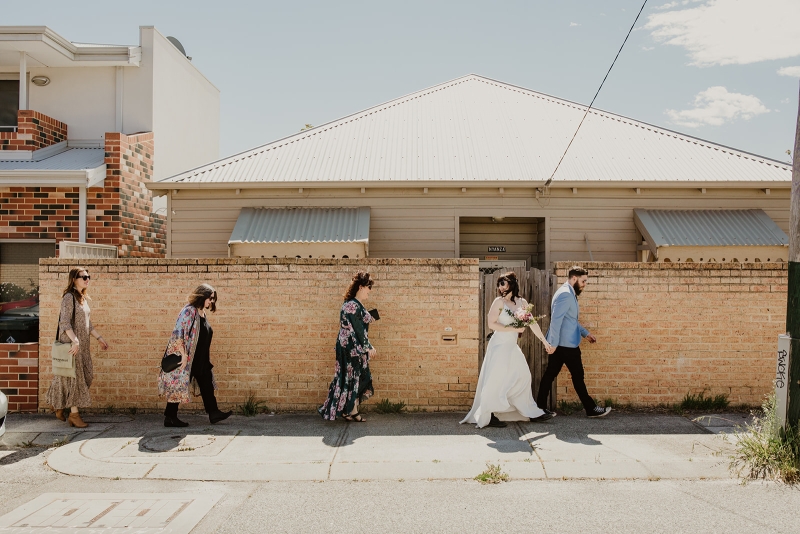
Ellie and Paul eloped – You don’t need a fancy car – this couple, their mums, celebrant and photographer simply walked to their favourite local park to elope
What is a wedding?
Whether it’s an elopement, micro-wedding or huge wedding ceremony, a wedding has a sense of occasion and includes some ceremonial aspects.
It usually includes the legal element of getting married, but it doesn’t have to. The legal proceedings can be separate to the wedding ceremony.
The ceremonial aspects include all the things listed above, and are all the things we think of when we think “wedding”. So how do couples choose what to include?
Start with your why and be mindful
Before you download any checklists, start a Pinterest board or start scrolling for inspo, talk to each other about why you’re doing this. If it’s simply to be married, you could just get the paperwork sorted with zero ceremonial aspects. If it’s to celebrate the fact you’ve found each other, and all that you have, then you probably want a party with your best people. Work out what’s really important to each of you about this rite of passage.
And I know it’s boring, but take the time to openly discuss your budget expectations together early in the planning process. Please don’t start your marriage with a debt from your wedding or by lying to your spouse about how much something costs.
When you’re faced with yet another decision throughout the planning process, keep coming back to your why to feel into whether or not that element is invited to your ceremony. If you both genuinely feel lit up at the thought of exchanging rings or dancing down the aisle together, then let’s make it happen. If not, it doesn’t deserve to be included.
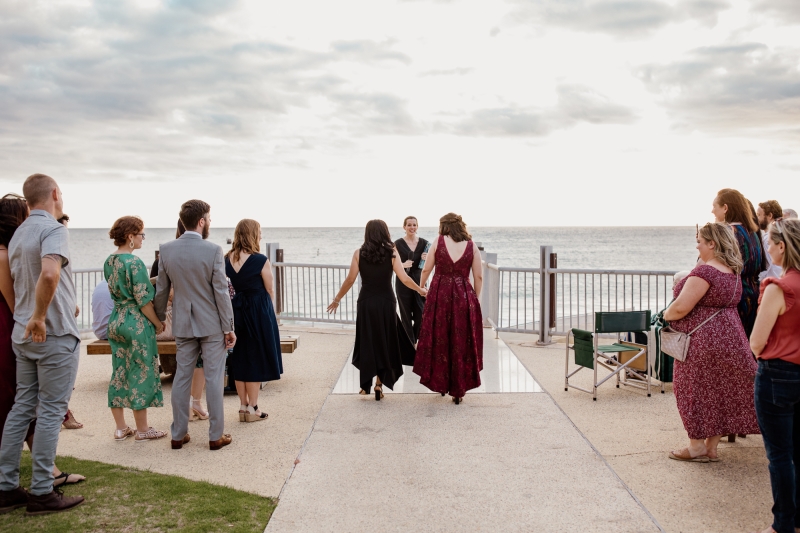
About the author: Sally Bruce is a marriage celebrant who has been creating elopements and non-traditional marriage ceremonies on Noongar boodja in Perth and south-west Western Australia since 2020. She loves working with couples to co-create meaningful marriage ceremonies that truly reflect who they are and their relationship. Find her at sallybrucecelebrant.com.au or @sallybrucecelebrant on Instagram.
Images throughout this post captured by Red Eclectic
Header image of Carlie and Raphael. Says Sally “Your ceremony can be fun – for this couple, having me tell their love story during the ceremony brought laughter and lightness.”


Join the conversation