
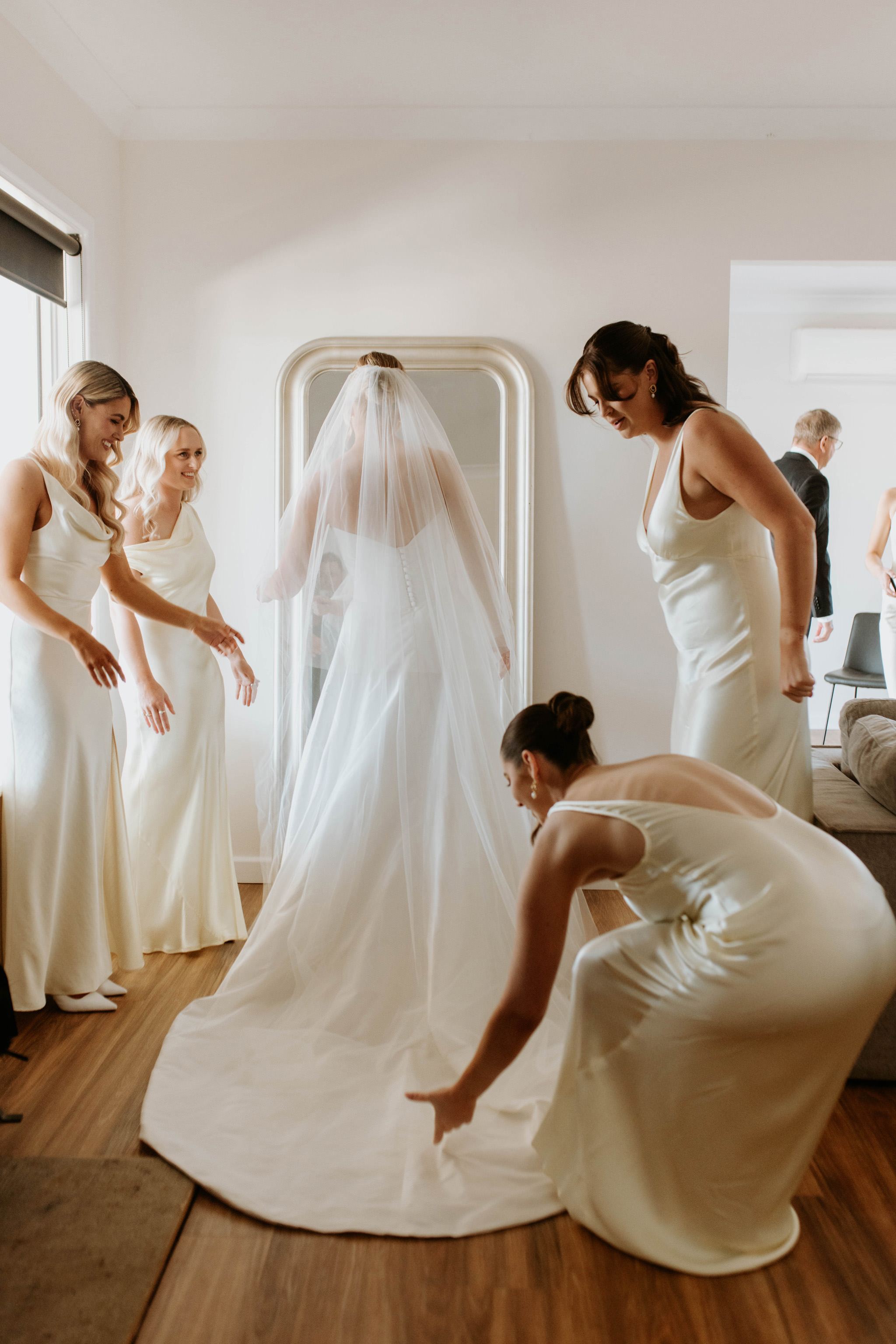
As part of our Mindful Issue, where we’re exploring the intentional and considered side of wedding planning, we asked Sally Conant, Executive Director of the Association of Wedding Gown Specialists, to share what mindful gown care actually looks like. Your wedding gown goes through a lot on the day you wear it. The hem drags along floors, across grass, through doorways. You dance in it for hours. You spill things on it, or things get spilled near it. And then it goes into a bag or a box and most people don’t think about it again for years. Sally has spent a long time thinking about exactly this.
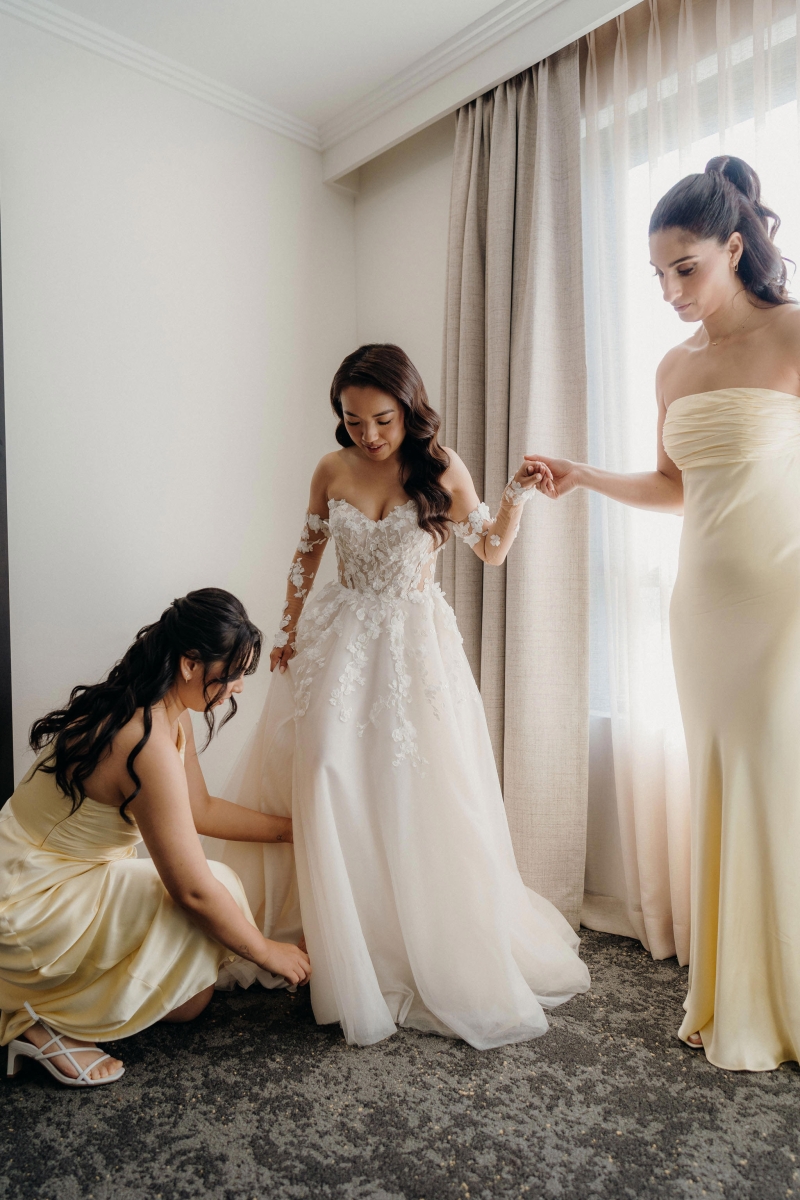
Photo by Love Pixels from Anita & Steve’s Elegant Waterside Wedding in Sydney
1. It’s not just the obvious things that are a problem
Ordinary dirt does not look nice on a gown, but it does not do much damage unless it is the kind of red clay that really sticks to the fabric. The problems come from the other things the hem picks up from the floor or outdoors, things such as wine, mud, or black asphalt. The sugar in wine, especially white wine or champagne, cannot easily be seen when the stain is fresh, but over time the sugar caramelises into dark brown spots that do not come out with ordinary cleaning. Oxidised sugar stains require a process called restoration, which is water based and can bleach colour or, on a silk gown, even remove the finish of the fabric. The problem with asphalt is the little rocks that can also damage the finish of the gown.
2. Dry cleaning is usually the right call, but not always
Dry cleaning is safe for both artificial fibers and for silk or woolen gowns. However, old-style machines that use perchloroethylene as the solvent can damage the decorations on the gown, melting beads such as pearls and blackening silver embroidery. Any other dry cleaning solvent is safe for both the fabric and the decorations. Water as a solvent is an option for gowns made from artificial fibers but can be disastrous if the gown is made from silk or, rarely, from wool.
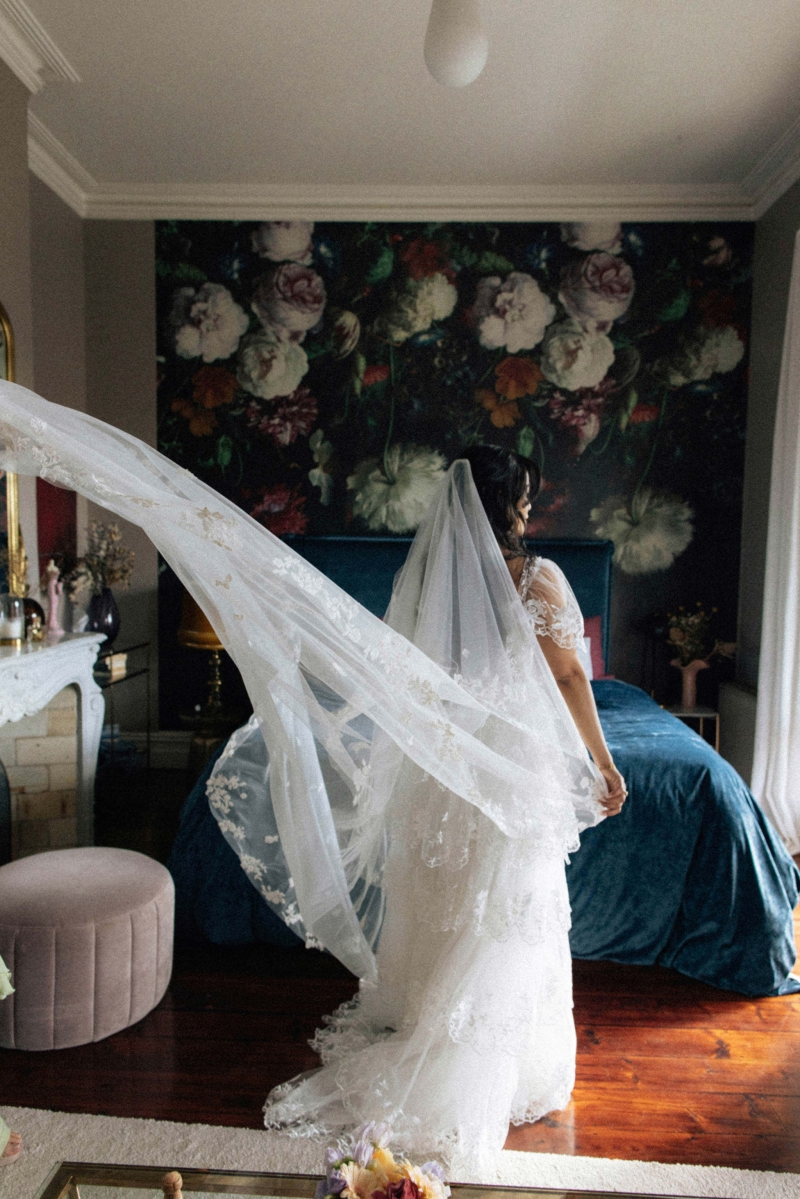
Photo by Art Of Grace from Troy & Diana’s Whimsical Wedding at The Wool Mill
3. Cleaning at home is harder than it looks
It is hard to find a container large enough to allow the gown to be cleaned properly at home. Some use the bathtub, but if the bathtub is not wholly clean, the result is not good. Others use a washing machine and when the machine extracts the water, the gown is badly wrinkled and very hard to press properly. Some soaps are too harsh, and using a chlorine bleach immediately turns the gown permanently yellow. Using water to clean silk is almost impossible to do properly because of the size of the gown. When you put a gown into water, you most often end up causing the fibers to shift, and then what looks like an ordinary wrinkle cannot be repaired.
4. The most important part of preservation is a clean gown
If the gown has not been carefully reviewed and hand spotted before it goes into a machine that rinses out all the solutions used to remove stains, the gown will be discoloured and spotty. Once the gown has been properly cleaned, the next step is to protect the gown from air and light so it does not yellow, and that requires a special container.
5. Not all boxes are created equal
Ordinary paper and boxes contain acid that scorches the fabric and discolours the gown. Some paper and boxes are pH neutral, meaning the acidic content has been neutralised during the manufacturing process, but if the container gets wet or is stored in a very damp area, the neutraliser dissolves and the box re-acidifies. The best way to be sure the gown will be protected from air, light, and any acidic content is to pack the gown in a container that is completely acid-free, meaning the acid has been completely removed during the manufacturing process.
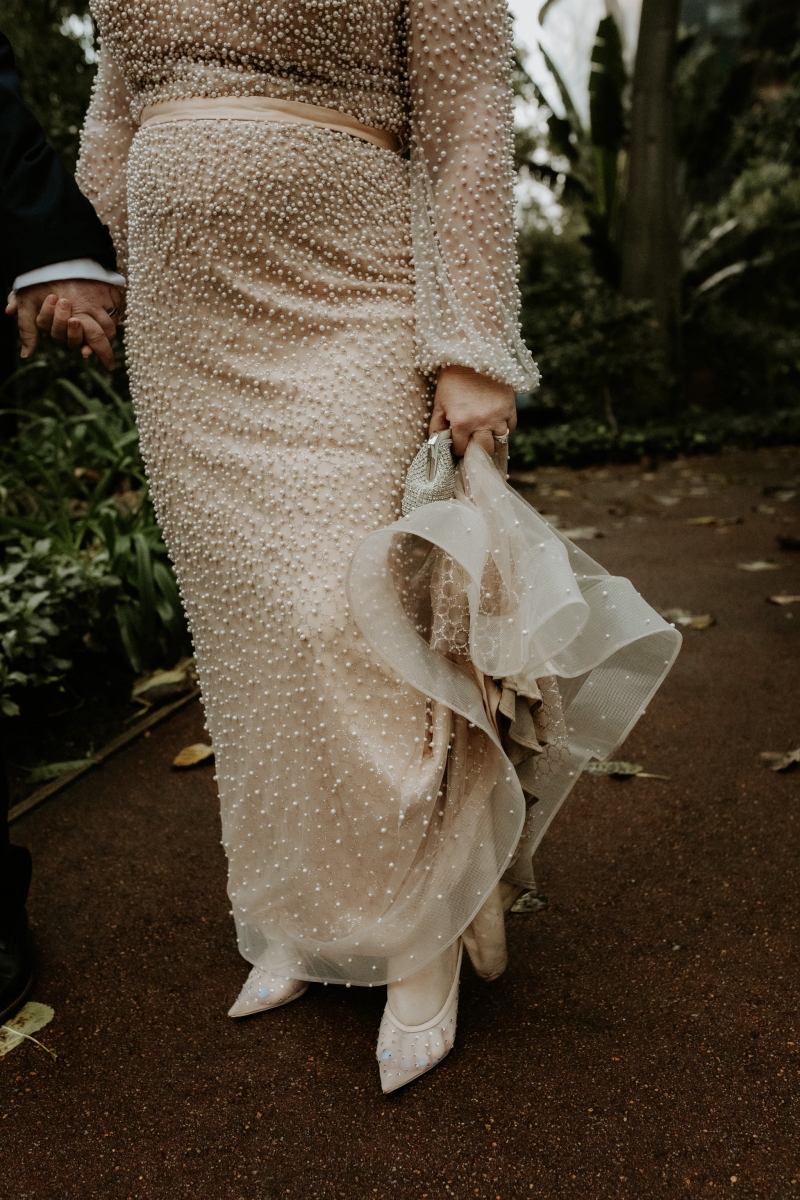
Photo by Kimmy Stevens from Wendy & Steve’s Intimate Wedding at Lamont’s Bishops House
6. Where you store it matters as much as what you store it in
It is tempting to store the gown in the original bag, but that will not prevent the gown from yellowing because bags do not protect the gown from air. Acid-free containers protect the gown from the air and light that discolor it. Ideally the container should be stored in a relatively dark area that is not damp and not touching an outside wall. An outside wall that is below ground, or even above ground in a very damp or wet location, allows damp to penetrate the container. The container should also be stored somewhere safe from pets, because dogs will sometimes decide the container is a good snack and not stop chewing even when they reach the gown itself.
7. A well-preserved gown can last for generations
The containers we use have been tested and shown to be effective for literally 1,000 years. However, fabric rarely has a shelf life of more than 200 years. Overall, if a gown is cleaned and stored properly in an acid-free container, it should be safe for several generations.
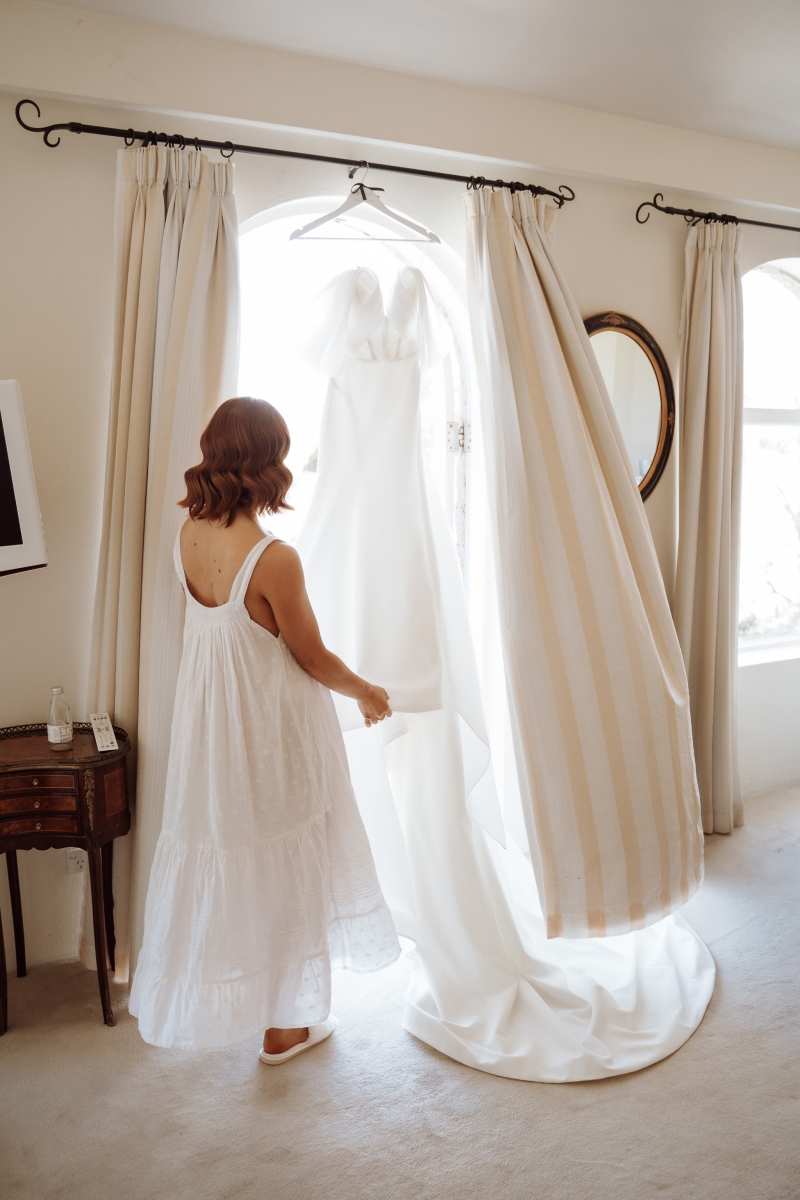
Photo by Doxa Visual from Josh & Ash’s Intimate Tasmanian Micro-Wedding at Villa Howden
8. There are more options than you think if you’ll never wear it again
Not everyone is content to give up the gown forever. Many brides take out their gowns at least once and wear them on the anniversary of the wedding, and some do that for several years. Even if the daughter does not wear her mother’s gown, she may elect to wear it at the rehearsal dinner. Sometimes it is the granddaughter rather than the daughter who chooses to wear the gown, and sometimes it is the daughter-in-law to be. Other brides elect to sell their gowns and hope to offset the original cost. There are also brides who decide to make keepsakes from their gowns such as pillows or frame a portion of their gown. In some countries, the tradition is to make christening gowns from wedding gowns, and veils are often turned into covers for baby buggies to protect the baby from insects. Gowns can also be donated so that women who cannot afford the expense of a gown can wear something beautiful. Still other places accept donations of gowns that can be made into burial garments for babies.
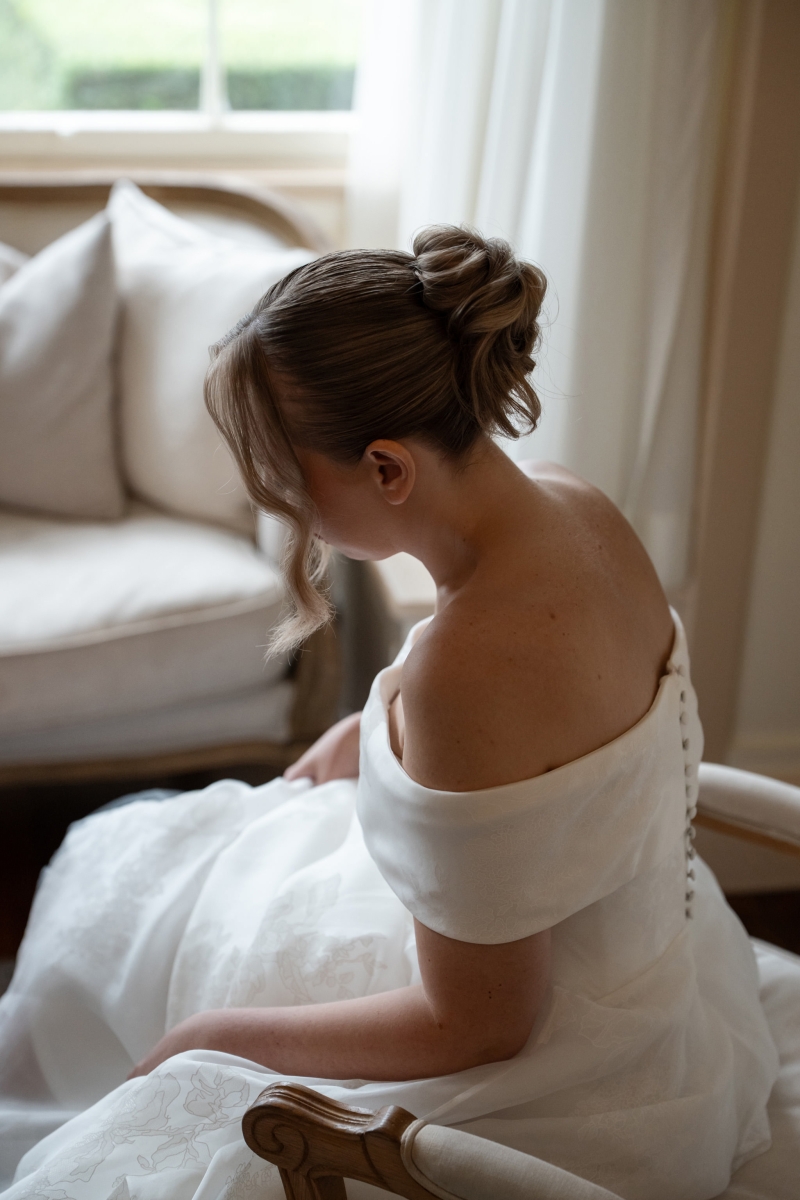
Photo by Daniel Chafer from Josh & Katie’s Romantic Misty Wedding at Gabbinbar Homestead
9. You can make a conscious choice before you even buy
For couples who want to limit the resources needed for their wedding, consider a cotton or silk gown that can be repurposed after the wedding so you can wear it again. Or consider a previously-worn gown, whether worn by a family member or found on the internet or in a store that carries vintage gowns.
And if you do choose to have your gown preserved, know that many years ago we made an effort to calculate the carbon emissions for the bride’s travel to and from the cleaner, the process of cleaning the gown, and the manufacture of the acid-free wedding chests we use. We partnered with a non-profit organisation and chose planting trees around the world as our carbon offset. When that organization turned their entire operation over to a for-profit company, we went looking again, and discovered the Arbor Day Foundation, an international non-profit that plants trees. Now, in celebration of the couple’s wedding, for every preservation our partner the Arbor Day Foundation plants a tree in a forest of great need.
*Cover photography by Anne Cooper Photography from Meg & Jack’s Spring Farm Wedding in New South Wales
About the author: Sally Conant is the Executive Director of the Association of Wedding Gown Specialists , represented in more than 500 cities worldwide. The Association offers specialist cleaning, preservation and restoration for wedding gowns, including museum-quality containers and a written international guarantee. For every gown preserved, they partner with the Arbor Day Foundation to plant a tree in a forest of great need.





Join the conversation