As part of our Australian Wedding Budget Series, we’re investigating the real costs behind the many different elements that make up a wedding. Now it’s the jewellers’ time to shine! We’re talking about wedding rings and special occasion jewellery, and what they typically cost for Australian weddings.
Rings are a slightly strange part of your wedding budget. They’re not really part of the obvious look and feel of your wedding day in the same way that flowers or outfits are, but they matter deeply to the meaning of it. Long after the flowers are wilted, and the outfit is packed away, your rings are still there. On your hands, every day as a symbol of your commitment and love.
And, as always, what you spend depends on how much you prioritise them against every other element in your budget.
So for this guide, we asked a group of jewellers we trust to talk us through how ring pricing really works. Not just the numbers you see on a price-tag in a window, but what lies beneath impacting cost. And what they wish couples understood before they started shopping!
A big thank you to our contributing jewellers: Meg from Meg Maskell Fine Jewellery, Melody from Vinny & Charles Jewellery, Fairina from Fairina Cheng, Diamondport Jewellers and Zachary T. Conway of The Sacred Goldsmith.
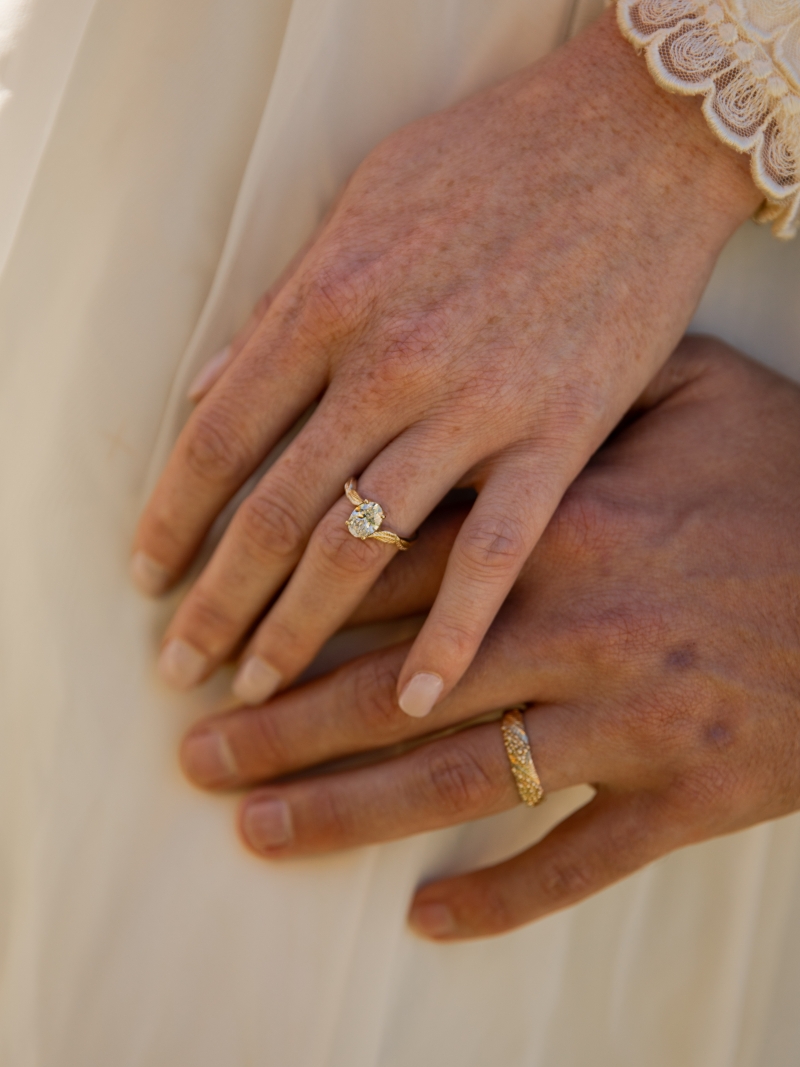
Rings by Vinny & Charles, Photographer – Cereal Box Creative
What does a wedding or engagement ring cost in Australia?
If there’s one thing that came up again and again with our jewellers, it’s that there is no magic number you’re supposed to hit. As one jeweller put it, “If there’s one thing I always say, there are no rules. There’s no one-size-fits-all answer, and that’s the beauty of modern weddings.”
Still, it helps to have some real-world ranges in mind.
For engagement rings in Australia, many couples find themselves starting somewhere in the mid four figures and moving into the five figures. One jeweller told us, “The typical spend in our store is $5000–$10,000.” From there, the number shifts quickly depending on what you choose. One maker shared, “The rings I make typically range between $4,000 and $15,000 with non-diamond centre stones, and from $8,500 to $25,000 with diamond centre stones.” Another broke it down by stone type and origin, saying, “$4–8k for a lab-grown diamond ring, 8–20k for natural diamond, 7–15k for Australian sapphire and 10–20k for Ceylon sapphire.”
Wedding rings tend to sit in a slightly narrower range, especially if you’re choosing simpler bands. One jeweller summed it up like this: “The wedding rings I make typically range between $700 and $4,000, depending on the design.” Another added, “Typical spend for wedding bands is approx $4000 total.” For many couples, that means a few hundred to a few thousand dollars per ring, with the total climbing if you add stones, fitted shapes, or more intricate detailing.
So why do the numbers vary so much?
In most cases, it comes down to materials first, then build. Gold and silver sit at very different price points per gram, and for the same ring design, the material cost alone can be around 100 times higher in gold than silver, while both require the same expertise and artistry to make.
The karat matters too. 9ct contains less pure gold than 18ct, making it more affordable but less durable over time. And with gold prices having risen substantially in recent years and remaining volatile, jewellers will often requote if there’s been a gap between your initial conversation and placing an order. Gemstones, of course, have their own shifting market too.
All of which is why the total can shift so quickly depending on what you choose. More precious metal, higher purity, or a chunkier band simply means more valuable material going into the ring.”
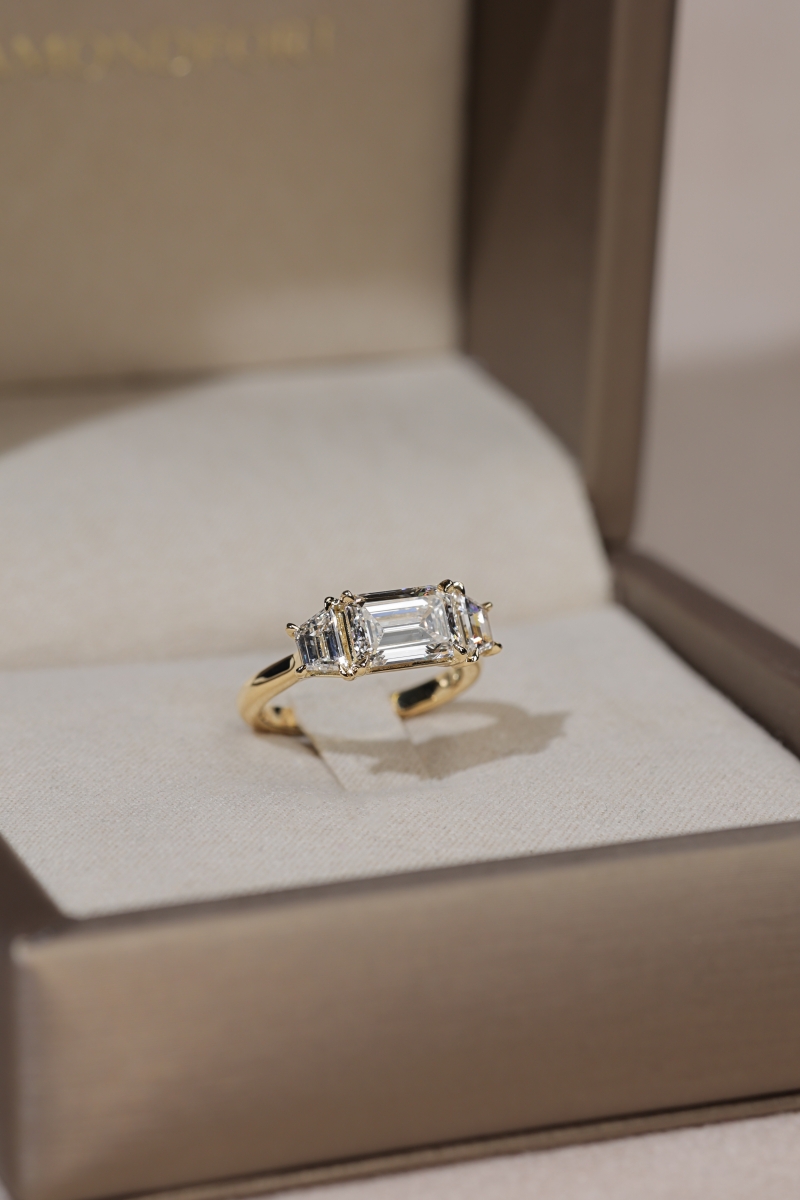
Custom ring by Diamondport, Image courtesy of Diamondport
How should couples determine their wedding & engagement ring budget
If you’re looking for a simple rule of thumb, you’re probably going to be disappointed (get the feeling yet that there is no one size fits all answer for anything to do with weddings?) The most consistent advice from the jewellers was to start with what the ring is meant to mean, not what it is meant to cost. As one put it, “It’s the gesture and meaning behind the ring, not the price tag that means the most when proposing.”
That’s a helpful place to begin, because it pulls you out of comparison mode. Before you get caught up in numbers, it’s worth asking what your partner (or you, if you’re the wearer) actually loves. One jeweller described it in a way that’s easy to picture: “Instead, a certain shape, a unique stone, and meaningful colour, an engraving on a simple band with a pretty version of their fave stone colour or type are typically perfect, and make your lover feel seen and loved.”
From there, it helps to take a step back and consider the ring as part of the overall picture. One of the contributing jewellers framed it like this: “Think about where the ring fits into the bigger picture. You may want to invest in a ring that tells your story or allocate more budget towards your wedding, honeymoon, or other experiences.” Another kept it even more grounded with this approach: “Spending enough to buy a quality piece from a local jeweller you can build a relationship with, but no sense going into debt for.”
It also helps to decide early whether you’re shopping ready-made or going custom, because that choice changes both cost and timeline. One jeweller explained the trade-off clearly: “There will be a type of jeweller for every budget, a mass-produced style jeweller if you are only focused on price and sticking to more simple and non-customisable styles. Or a custom jeweller will be able to offer much more personalisation and design options but this is time-consuming and higher quality materials and methods are used so therefore at a higher cost.” They also flagged the practical reality: “Custom jewellers will have a lead time for production also so the ring may not be ready to take home for 6-10 weeks.”
Lastly, when you’re trying to decide where to spend and where to simplify, it’s worth thinking about how your ring will be worn, and what kind of lifestyle it needs to stand up to. Different alloys and purities wear differently over time, especially for pieces that are on your hand every day. One jeweller explains, “Consider longevity of materials. 9ct generally lasts 5–10 years, 18ct lasts 10–20 yrs, 24ct lasts lifetimes.” That does not mean your ring suddenly stops existing at those points, but it does reflect how often lower-purity or thinner rings may need more maintenance, reshanking, or repair over decades of wear. It’s the kind of detail that can help you decide when paying a bit more now might feel worth it over the long run.
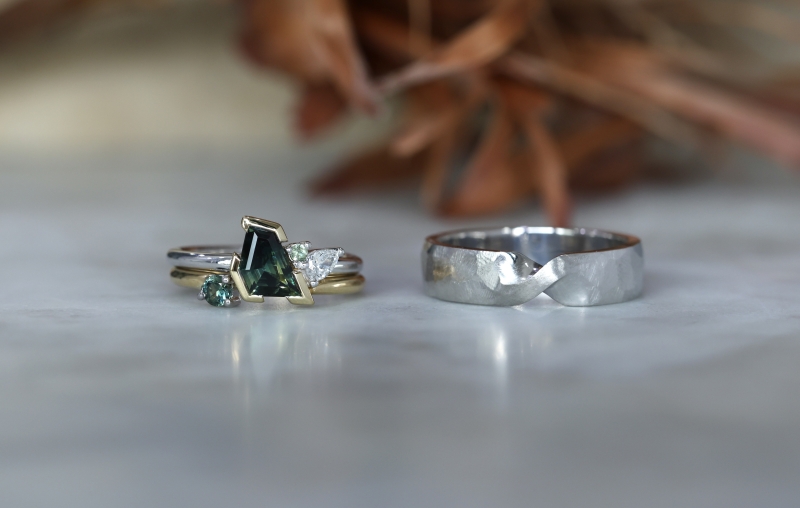
Unique sapphire engagement ring and wedding band from Meg Maskell Fine Jewellery, Photographer Meg Maskell Fine Jewellery
When we asked the jewellers contributing to this guide about what really shapes ring pricing, the answers kept circling back to the same few things. The metal market. The time and skill it takes to make the piece. The stone choice. And the reality that prices move.
The metal market
When it comes to metals, one jeweller summed up the moving-parts problem perfectly. “[Metals and stones] are each the core foundation of the price and this fluctuates each month. Gem prices, metal prices, each and all go up and down, yet on average go up. It is always cheaper in the long run to buy now rather than later.” Another called out just how intense the gold market has been lately. “Current market prices is a HUGE one at the moment. The cost of gold has hit record highs and shows no sign of slowing down.” They also noted that pricing shifts can change what makes sense. “18ct white gold rings are now the most expensive option (all other design factors equal)…I no longer quote 14ct and 18ct white gold rings for this reason, as platinum gives customers the best bang for buck.”
Labour, time, and design complexity
Labour and design are the quieter costs people often do not see until they start comparing quotes. As one jeweller put it, “Designs that require more labour hours will also come in at a higher price point.” Another added, “Design complexity and stones will affect the pricing the most.”
Stone choice and sourcing
Stone choice is where prices can swing especially fast, particularly once you move beyond more standard options. “With the more distinctive coloured gemstones, each stone has its own unique personality and it can be difficult to compare like for like. I would suggest communicating your preferences to your jeweller and then refining them depending on the options you’re shown.”
Ethical sourcing sits in a more nuanced spot than people often assume. One jeweller said traceable stones can be more expensive, but not always. Another was even more direct, saying ethically sourced is “generally the same price as most gems are ethically sourced now.” In other words, it might change the quote, but it is not automatically the budget blowout people fear.
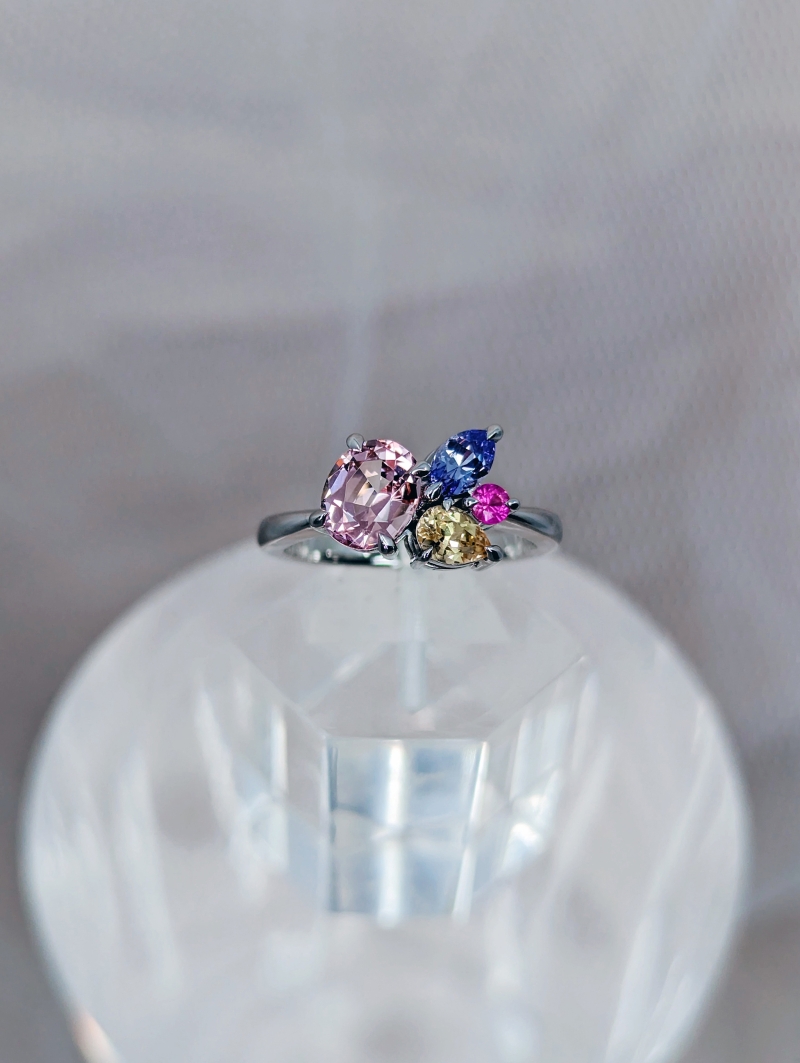
Tourmaline sapphire cluster ring by Fairina Cheng, Photography – Fairina Cheng
Personal touches like engraving and secret details
Engraving is the add-on that comes up most often. One jeweller priced it as “From $30 – $300 depending on length and whether it’s hand engraved or laser engraved”, while another put simple engraving at “$50-100”. If you want something decorative, it becomes a bigger piece of work. “Ornate hand engravings start from about $250 and can go over $1,000.” Some jewellers also mentioned, “Engraving or secret stones is a nice addition, budget $60-$300 for these.”
Stone setting and upgrades
If you are adding stones to a band, the setting can become a real line item because it is often priced per stone. One jeweller said, “On average, you can expect to pay from about $90 per stone [setting]”, while another quoted “$70 per diamond.” Those numbers are worth asking about early, particularly if you are considering pavé or multiple small stones.
Resizing and remakes
Resizing is one of the costs couples most often overlook, partly because it is sometimes included, and partly because not every ring can be resized easily. One jeweller flagged that “Resizing is often included”, but also warned that “many designs cannot be resized and must be remade”, and that “ring size is the core most vital aspect of custom ring making.” Another jeweller gave a practical ballpark: “$150-200 for resizing.”
Insurance, cleaning, and ongoing care
Insurance is optional, but it is one of the few ongoing costs that can surprise people. One jeweller estimated “Insurance premiums generally cost around 2-3% of the ring’s value annually”, and another put it at “2.75% cost of the rings.”
On the care side, plenty of jewellers will clean what they have made as part of aftercare. “Most good jewellers should clean a ring they have made once a year for free”, and another shared, “We offer a free yearly clean, stone check and polish.” If you are choosing white gold, budgeting for plating is sensible. “Rhodium plating, polishing and a health check typically costs around $120 (recommended annually).”
So to sum it up, when you’re budgeting for your rings, you’ll want to think about:
- The rings themselves, including the metal, stone choice, and overall design
- The current metal market and how that affects pricing (especially gold and platinum)
- Labour and production time, particularly for custom or complex designs
- Stone setting costs, especially if you’re adding multiple or smaller stones
- Engraving or personal details, including hand engraving or hidden stones
- Resizing or potential remakes, especially for designs that cannot be easily adjusted later
- Certification costs, if you’re choosing a certified diamond or gemstone
- Insurance, which is usually an ongoing annual cost based on the ring’s value
- Ongoing care and maintenance, such as cleaning, stone checks, and rhodium plating for white gold
- Any presentation extras, like upgraded ring boxes, if they’re not included.
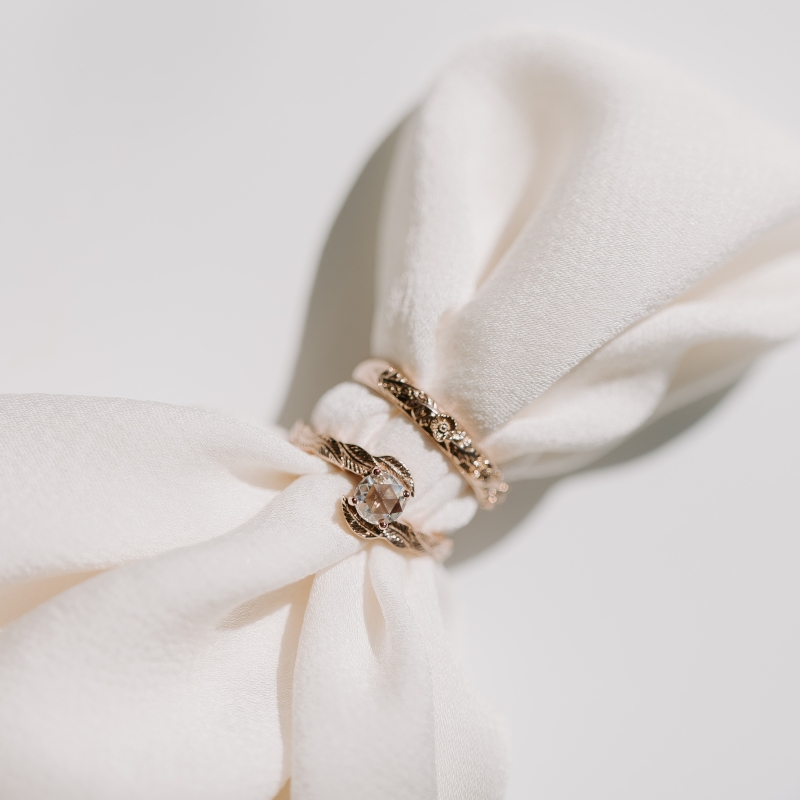
Nature inspired rings by Vinny & Charles
What goes into the price we pay for wedding & engagement rings?
All of the above explain what moves the price tag up and down. But there’s another side to ring pricing that’s easy to miss when you’re just looking at a finished piece in a display case. The behind the scenes work!
It’s easy to look at a price and feel a bit startled, especially when the finished piece looks so simple. But a ring rarely starts at the bench. It starts with time. Time spent talking through ideas, sourcing stones, refining a design, and getting the details right.
One jeweller broke down the hours like this. “I might spend up to 2 hours on an initial consult discussing ideas, showing gemstones and refining a design. Then 2-3 hours sourcing gems, quoting, sketching and further discussions. Making can take between 2 and 15 hours, depending on the design. Then there’s packing, sending, photography…which can add another hour or so. So between 7 to 20+ hours!” Another put it more simply. “On average, we spend anywhere from 10 to 20+ hours on each wedding ring order from start to finish.” Across different makers, the spread gets even wider, from “6 hours” through to “4-10 hrs – meeting times, design time, communication time (not including making the actual rings)”.
In other words, when you’re comparing quotes, you’re not just comparing materials. You’re comparing process.
That time investment is also why lead times can feel longer than couples expect. It may take, “Typically 8-12 weeks, depending on the design. Simpler is faster.” That wait is not just the making itself. It’s the back and forth, the sourcing, and fitting your job into a calendar that’s already full.
There are also costs built into the price that most couples never see, but that still form part of what you’re paying for. One jeweller noted, “If you’re getting a certified diamond or gemstone, there’s the cost of having it graded by a lab like GIA or IGI.” And for custom work, you’re also paying for the workshop tools and systems required to make jewellery properly. “There’s often a lot of specialised equipment involved; like polishing machines, CAD software for custom designs, casting tools, and stone setting gear.”
If you want the simplest takeaway, it’s this. A ring price is usually a blend of materials, labour, and process. So if you’re trying to understand a quote, ask what’s included, what’s part of the making process, and what ongoing care your metal choice might need down the track.
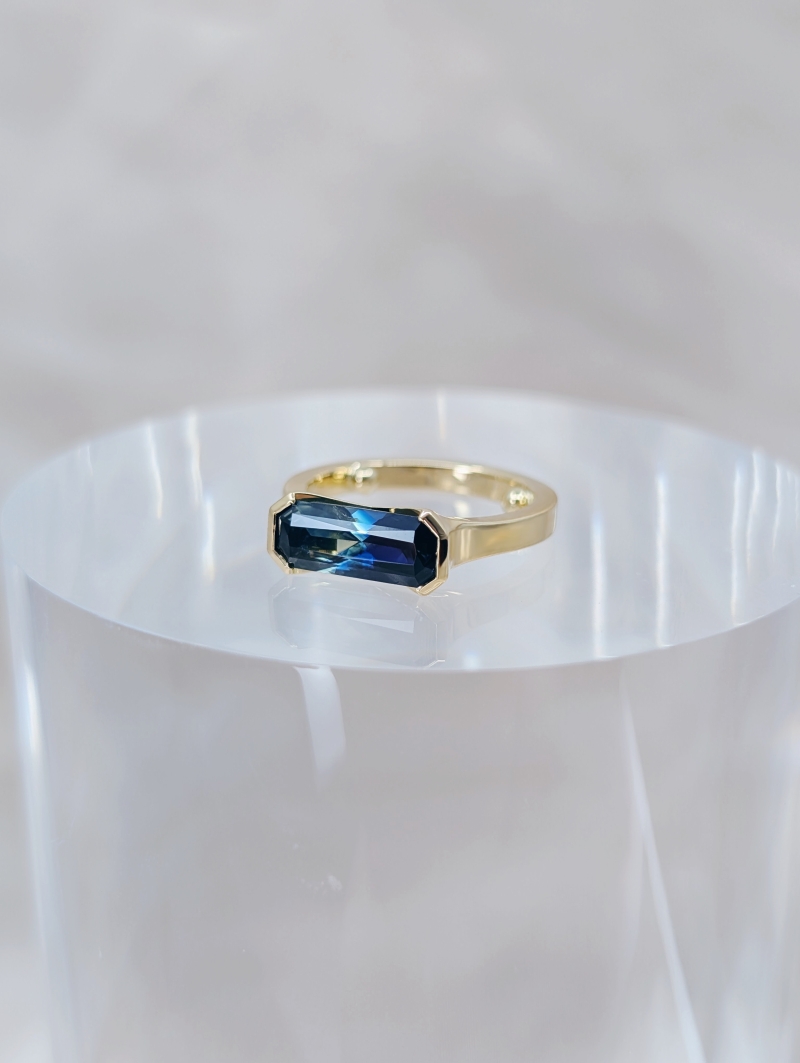
Emerald cut gold ring by Fairina Cheng, Photographer – Fairina Cheng
How To Save Money On Wedding & Engagement Rings
If you’re worried that quality rings are out of reach, there’s good news. There are plenty of ways to bring the cost down without ending up with something that feels like a compromise.
One of the biggest levers is materials. If you’re open to a different look, one jeweller suggested starting with silver. “Look into silver rings instead of gold, with lesser gemstones. You can have stunning rings made to last that look incredible from silver, being 100 times cheaper in material cost than gold.” They also pointed out that stone choice can shift the budget dramatically. “By avoiding diamonds, and buying crystals or lesser stones, you can save 10–20 times on stunning quality stones, if working with the right jeweller.”
If you love the look of gold but want to keep things sensible, another jeweller recommended going simpler and lowering the purity. “Plain gold bands, reduce carat of gold to 14 or 9ct. Simplify your design and avoid adding stones.” They also mentioned alternative metals as a way to cut costs, especially for bands. “Alternative metals like Tantalum or Titanium for guys is also a great money saver.”
How the ring is made matters too. If fully custom is stretching the budget, ready-made or semi-custom can be the sweet spot. “Ready-made rings are often more affordable than custom designs, but that doesn’t mean you have to sacrifice quality or uniqueness. Look for an independent jeweller that offers beautifully crafted, off-the-shelf rings.” Another jeweller suggested a semi-custom approach for couples who want something personal without the full bespoke price. “Opt for semi-custom. This allows you to personalise elements of a pre-designed ring, such as changing the metal and adding more gemstones, without the cost of a fully bespoke piece.”
For couples who want sparkle, lab-created stones came up again and again. “Lab-created diamonds, moissanites and sapphires will get you more bang for buck.”
And if you’re not ready for the dream ring right now, you don’t have to force it. One jeweller suggested a long-game approach. “Some couples go for a classic solitaire or a plain wedding band to start, and then add diamonds, engraving, or stackable bands for an anniversary down the track.”
The through-line in all of this is that you have options. You can simplify the design, rethink the materials, choose lab-grown or alternative stones, or start with something simple and build on it later. The end goal stays the same – find a ring that feels like you.
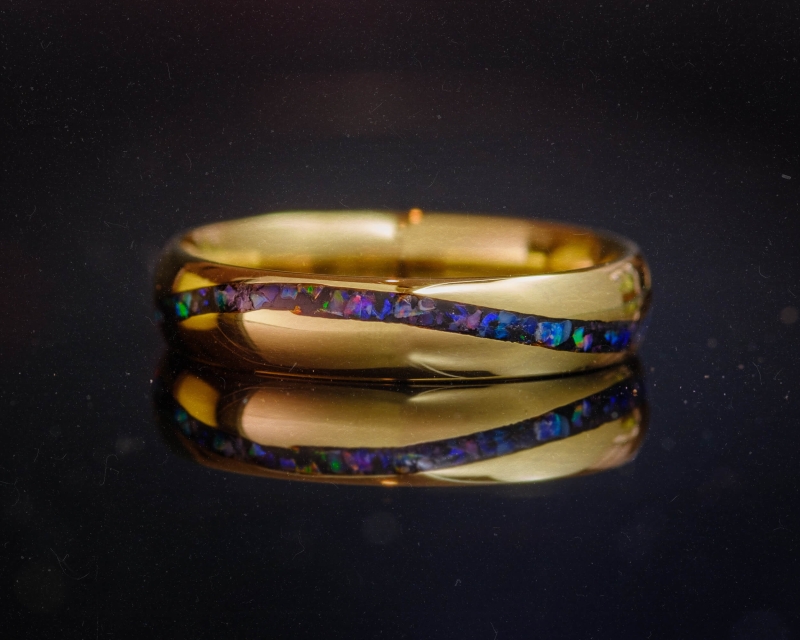
Image by Zachary T Conway – The Sacred Goldsmith, Photographer – Zachary T Conway
Final thoughts about wedding jewellery & budgets
If there’s one thing our jewellers kept coming back to, it’s that there’s no magic number you need to hit for this to feel meaningful. There are old scripts about engagement rings still floating around, but they are not a great compass. “Traditionally, couples were advised to allocate two to three months’ salary to an engagement ring, but today, most couples prefer a more flexible approach that reflects their financial situation and priorities.”
Put it into perspective; “Remember out of all things, this is the one thing you will wear for the rest of your life. Allocate accordingly.” At the same time, another was clear about staying within your means. “Do not spend what you cannot afford. If you have to go into debt, it’s not ideal.”
Finally, if you want the whole process to feel less stressful, this advice is worth keeping in mind while you browse: “Do not pressure jewellers to make what they do not offer, go to someone who specifically specialises in exactly what you ideally want, and you will get exactly what you want and more.” Another brought it home with the simplest reminder of all. “These will be worn as a symbol of your commitment. The ring will be a reminder of that commitment at all times.”
A heartfelt thank you to our incredible contributing jewellers who shared their wisdom and insights: Meg from Meg Maskell Fine Jewellery, Melody from Vinny & Charles Jewellery, Fairina from Fairina Cheng, Diamondport Jewellers and Zachary T. Conway of The Sacred Goldsmith.
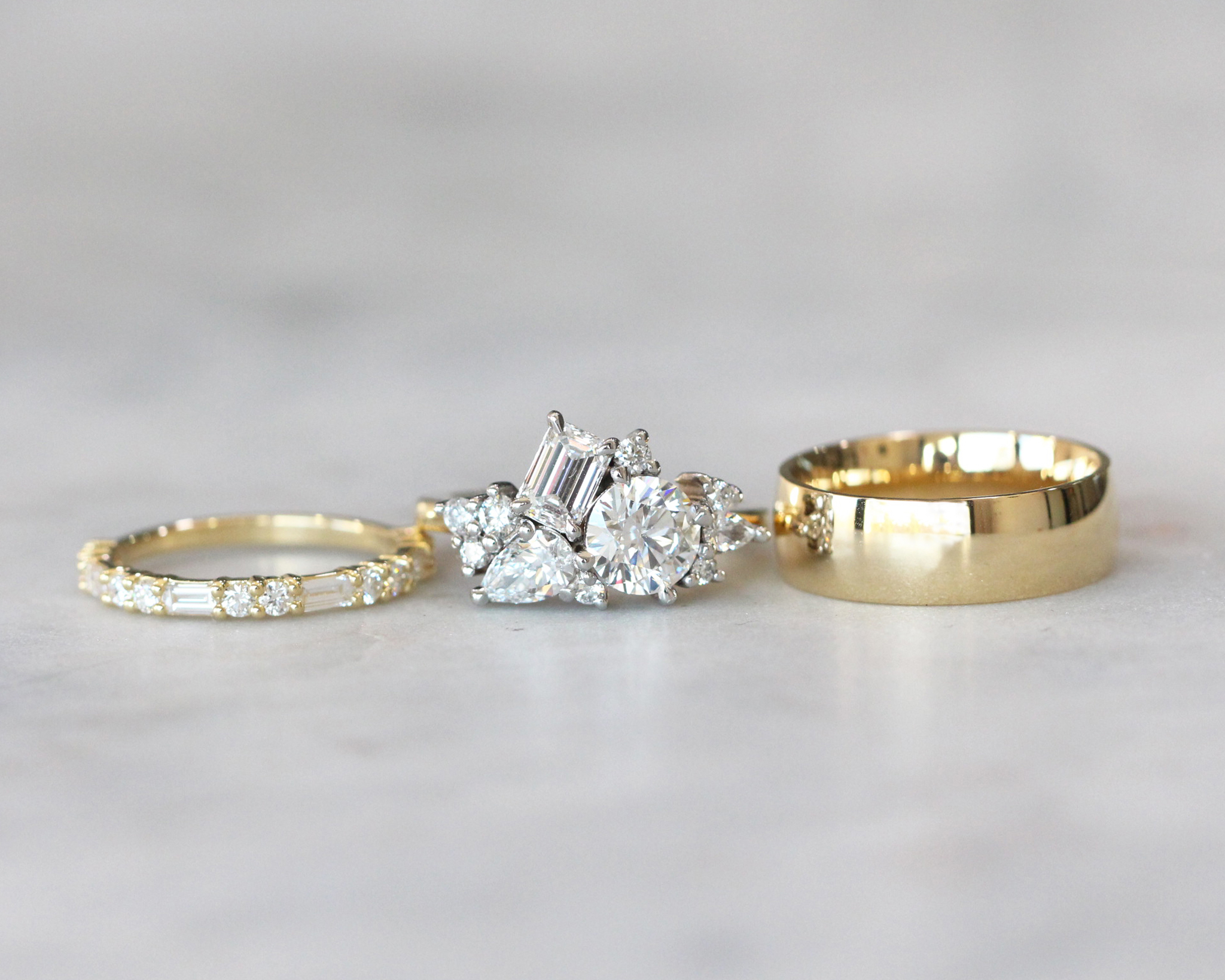
Main feature image: Custom rings by Meg Maskell Fine Jewellery, Photography Meg Maskell Fine Jewellery



Join the conversation